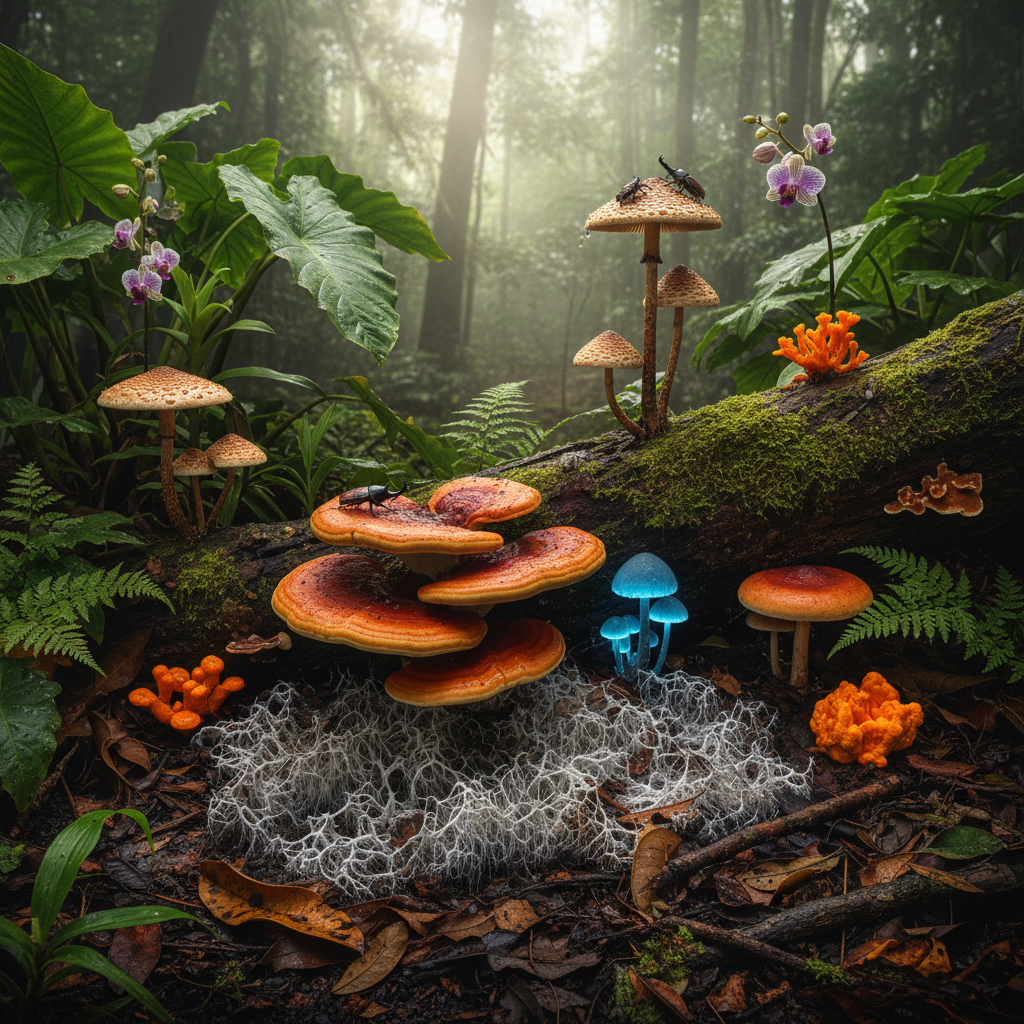
TL:DR: - Fungi are the entire kingdom of amazing organisms—think the massive hidden network of mycelium threads underground that recycle waste and connect ecosystems. Mushrooms? They're just the temporary "fruiting bodies" (like apples on a tree) that some fungi produce to release spores. Not all fungi make mushrooms (yeast and molds don't!), but the ones we eat or use medicinally—like shiitake, oyster, lion's mane, and local Malaysian favorites—are the delicious, visible part of this hidden world.
In short: Fungus = the whole organism. Mushroom = the flashy part we see and love to grow or eat. Perfect for sustainable micro-farming in Malaysia's tropical climate! 🍄
Hey there! If someone mentions "fungi," you probably picture those classic mushrooms popping up in a shady forest after rain. It's an easy mix-up—most of us use the words interchangeably. But surprise! Mushrooms and fungi aren't quite the same thing. Mushrooms are actually just a small, eye-catching part of the much bigger, super-fascinating world of fungi.
Let's break it down in a simple, friendly way so you can see why this matters—whether you're a nature lover, a home cook, or someone excited about sustainable farming right here in Malaysia.
First off, what are fungi?
Fungi are their own special kingdom in the tree of life, right alongside animals and plants (but not really part of either). Fun fact: genetically, fungi are actually closer to animals (yes, even us!) than to plants.
This kingdom is huge and incredibly diverse. It includes:
- Yeasts (the ones that make bread rise and turn grapes into wine)
- Molds (those fuzzy spots on old bread or fruit)
- Rusts and smuts (crop pests, unfortunately)
- And yes—mushrooms!
Unlike plants, fungi can't make their own food from sunlight. Instead, they're nature's amazing recyclers. They release enzymes to break down dead leaves, wood, or even leftover food, then soak up the nutrients. Without fungi, our planet would be buried under piles of undecomposed stuff—thank you, fungi, for keeping things cycling!
Now, let's talk about mushrooms.
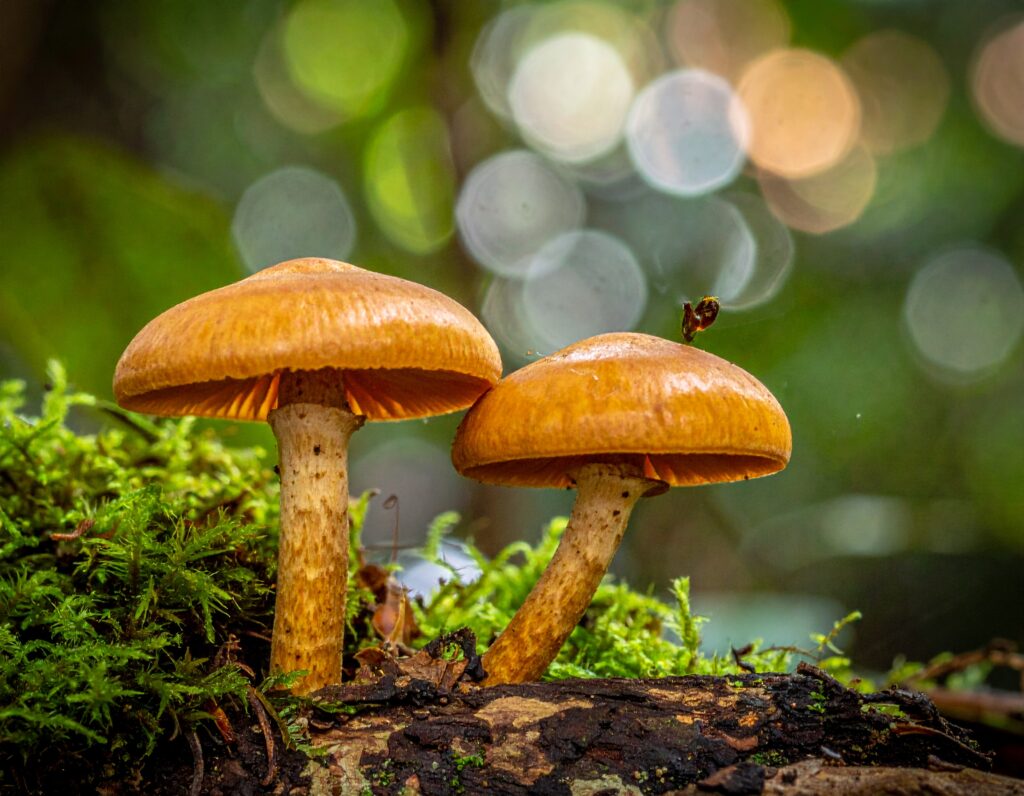
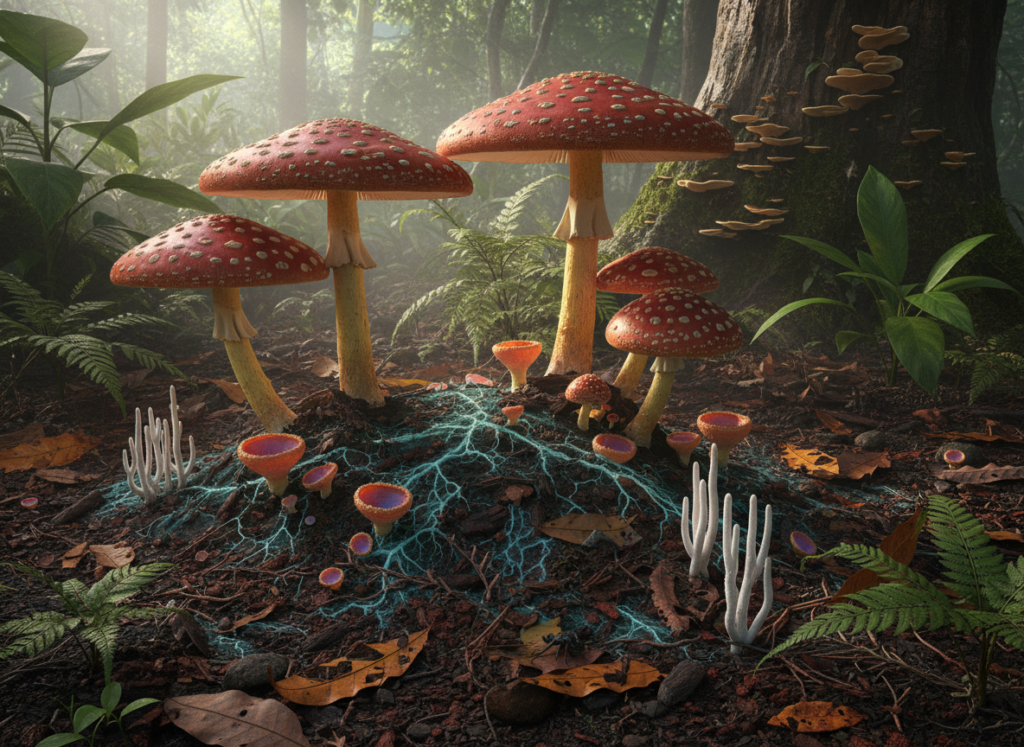
A mushroom isn't the whole fungus—it's just the fruiting body, the visible, above-ground part that many fungi produce to reproduce. Think of it like an apple on a tree: the apple isn't the tree itself; it's the fruit that holds seeds to make more trees.
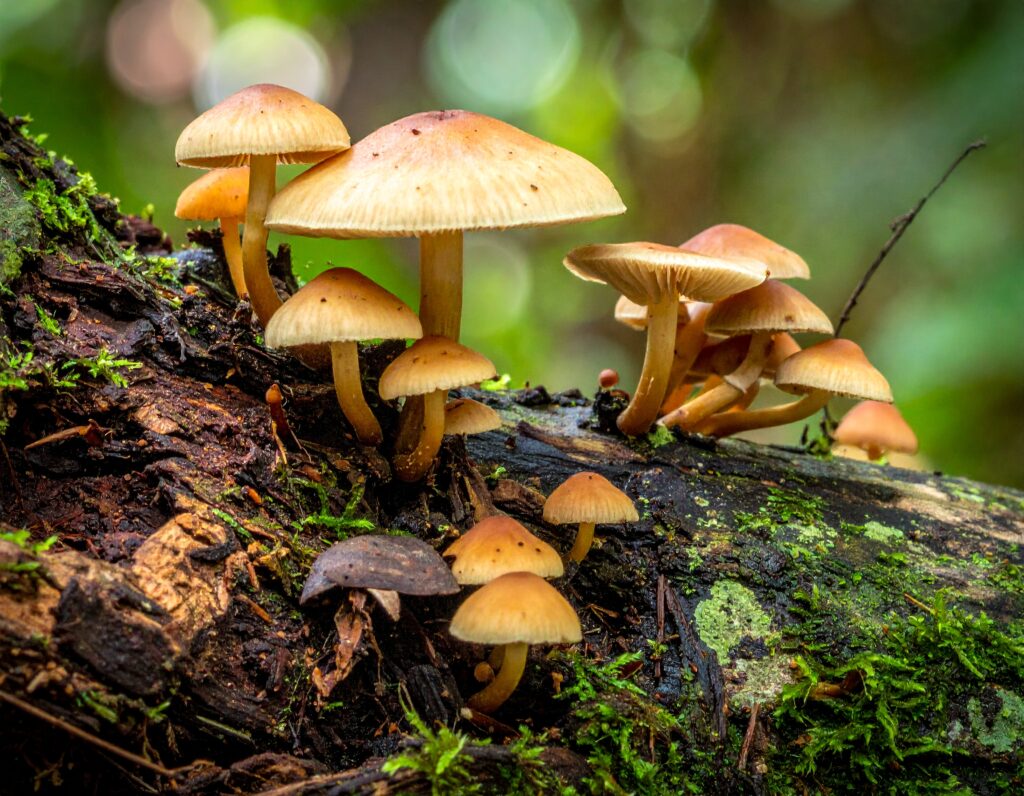
For certain fungi, the mushroom is that "fruit"—a temporary structure packed with spores (like tiny seeds) that get released to start new fungal colonies. The real "body" of the fungus? That's the mycelium—a hidden network of thin, thread-like strands spreading through soil, wood, or other substrates. Mycelium is the living, feeding part that does most of the work underground or inside logs.
Picture this: when you spot a cluster of mushrooms on a hike, you're only seeing the "flowers" or "fruits." Below ground, there could be miles of interconnected mycelium—some fungal networks are among the largest living organisms on Earth! (One famous Armillaria in Oregon covers almost 4 square miles and is thousands of years old.)
So, quick recap:
- Fungus = the entire organism (mycelium + any fruiting bodies + everything else).
- Mushroom = just the spore-releasing fruiting body of some fungi (not all fungi make them!).
Not every fungus produces mushrooms. Yeast buds to reproduce, molds form spores in different ways, and many stay completely hidden. That's why calling everything "mushrooms" misses the full picture of this incredible kingdom.
Why does this distinction matter in everyday life?
It helps us appreciate the roles fungi play:
- The mycelium quietly decomposes waste, connects plants through underground networks (mycorrhizae), and even helps trees share nutrients.
- Mushrooms are the flashy signal that the system is thriving and ready to spread spores.
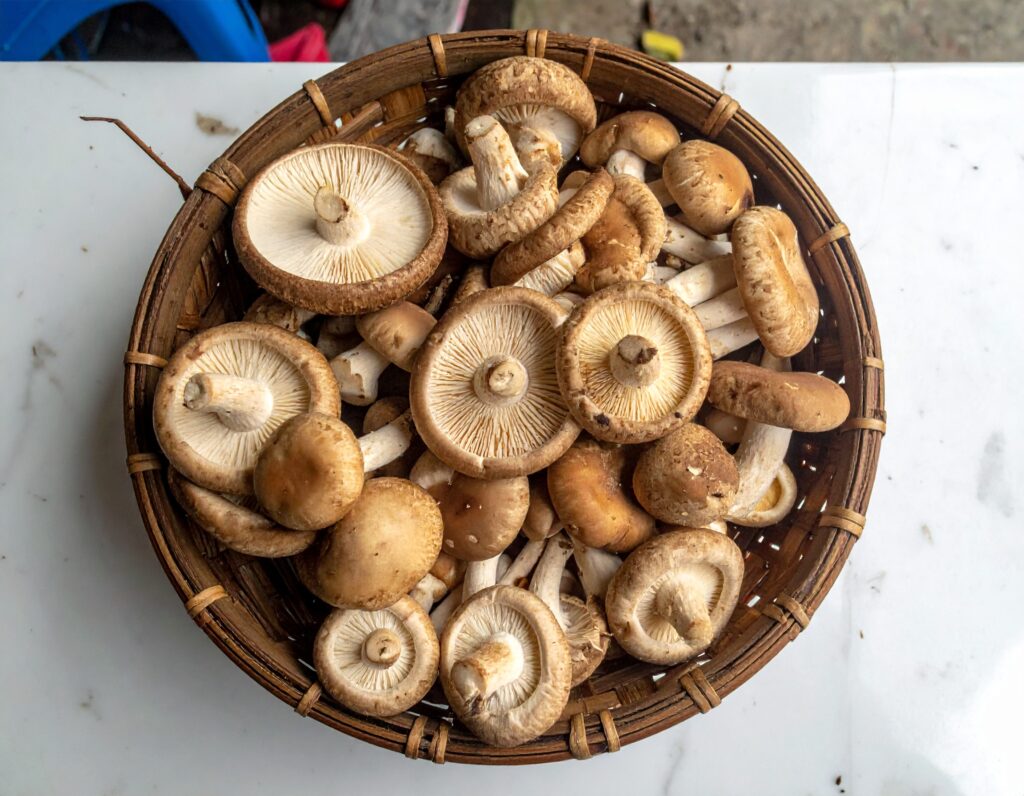
From a practical side, it reminds us that while many mushrooms are delicious and nutritious (think shiitake, oyster, button, or portobello), some are seriously toxic. Knowing the difference encourages safe foraging or buying from trusted sources—and celebrates the safe, farmed ones we love!
Here in Malaysia, this knowledge is especially exciting for sustainable food and health. Many popular culinary and medicinal mushrooms—like oyster, shiitake, lion's mane, and even local treasures such as tiger's milk mushroom (Lignosus rhinocerotis)—thrive in our tropical climate. They're perfect for small-scale, eco-friendly growing in micro farms, using simple substrates like sawdust or agricultural waste. At Ecoladang Micro Farms, we're passionate about bringing these nutrient-rich, home-grown options to tables across Malaysia—fresh, local, and full of goodness.
Next time you enjoy a stir-fry with oyster mushrooms or sip a lion's mane tea, remember: you're savoring just the "fruit" of an amazing, hidden fungal network that's been supporting life for millions of years.
What’s your favorite mushroom dish or fact? Drop a comment—we'd love to hear! Stay tuned for more on the best culinary and medicinal mushrooms you can grow (or find) right here in Malaysia.
Happy exploring, and here's to the wonderful world beneath our feet! 🍄