🎧 Stream the Audio Journey
Don't want to scroll? Listen to our specialized NotebookLM AI hosts break down this exact page into a fun, animated conversation in English and Bahasa Melayu!
▶ Play Episode on Spotify▶ Play Bahasa Melayu Episode on Spotify!
The Ecoladang Sovereign Biomass & Micro-Farm Initiative
(English and Bahasa Melayu included.)
Let’s have an honest conversation about the future of Malaysia’s agricultural backbone. The Malaysian palm oil sector is a massive economic engine, historically generating over RM120 billion in export revenues and supporting hundreds of thousands of families. But right now, we are quietly walking toward a massive demographic and productivity cliff. Millions of hectares of oil palm (Elaeis guineensis) are reaching the end of their 25- to 30-year commercial lifespan.
When these trees age, they don't just stop growing; they shoot up to around 66 feet (over 18 to 20 meters) into the sky. At this height, harvesting becomes incredibly dangerous and intensely labor-driven. The tree spends all its energy just trying to pump nutrients up that massive trunk instead of producing the Fresh Fruit Bunches (FFB) that farmers rely on to survive. We are looking at an estimated capital requirement of around US$3 billion (RM14+ billion at roughly RM20,000 per hectare) just to replant and renew these aging giants.
[Source: https://www.czapp.com/analyst-insights/aging-palm-oil-trees-in-asia-could-cause-supply-deficit/]
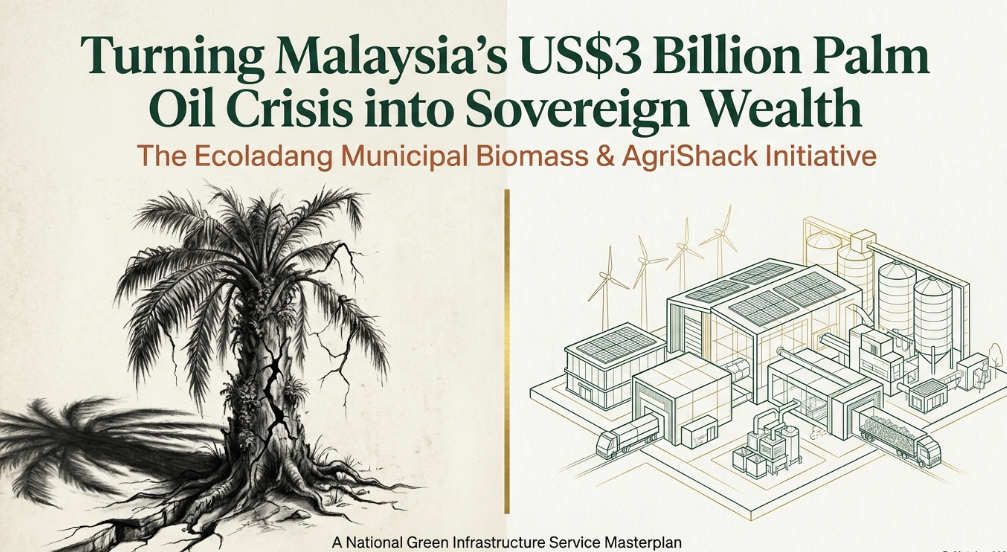
The EMF solution. A municipal size Pyrolysis plant built into a AgroPark.
The Replanting Trap and the Indonesia Gap
So, why aren't we just cutting them down and planting new ones? It is easy to assume that large corporate estates can just "mulch and replant," but the reality is that even for the massive players, this takes a very long time, requires maximum effort, and leaves them in a highly vulnerable financial position.
But the real crisis hits our independent smallholders. These are everyday farmers managing plots that range from 5 hectares up to 40 hectares. Together, smallholders account for anywhere from 26% to 40% of our national production, encompassing roughly 450,000 independent farmers. Right now, Malaysia's replanting rate is hovering at a sluggish 2%—well below the ideal 4% to 5% target. Meanwhile, our neighbors in Indonesia are aggressively managing their replanting phases and leading the global market in volume. If we don't speed up, Malaysia risks losing its competitive edge on the global stage, leading to underutilized processing mills and a severe threat to our national food and economic security.
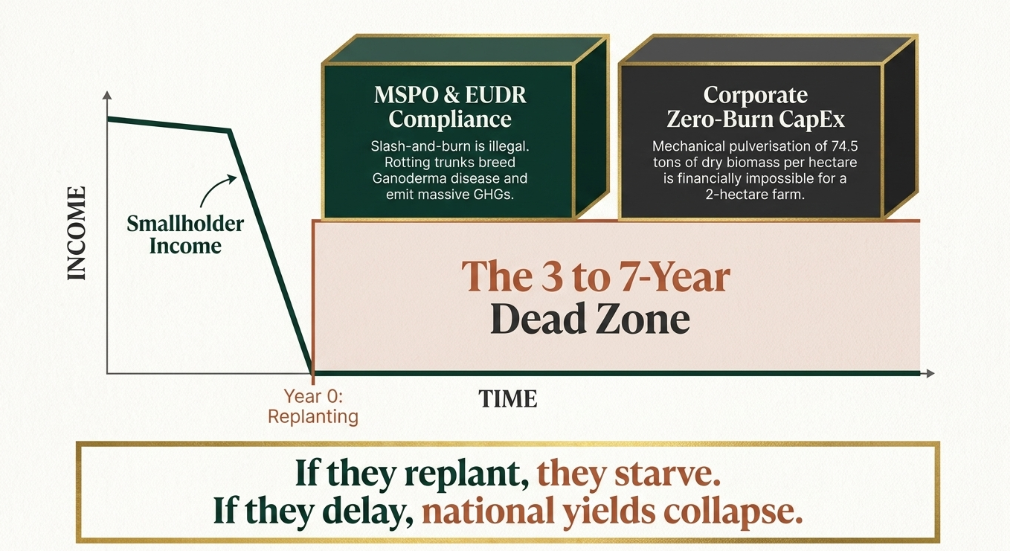
Historically, clearing a 40-hectare plot was cheap: you just slashed and burned. Today, that is completely illegal, and rightly so. To maintain our global market access, we operate under the strict, mandatory Malaysian Sustainable Palm Oil (MSPO) scheme and have to comply with the European Union Deforestation Regulation (EUDR). Open burning is banned, meaning farmers must use compliant "zero-burn" methods, which require incredibly expensive heavy machinery to tear down and shred the trunks. For a smallholder, buying or renting this equipment is financially impossible.
[Source: The Malaysia AgroPark Hub: Solving the Palm Oil Crisis - https://www.eco-business.com/news/technical-knowledge-remains-the-biggest-hurdle-for-independent-palm-oil-smallholders-to-comply-with-eudr/]
The Danger of Rotting Waste (Why We Can't Just Leave It)
Because of these massive costs, some might ask: "Why not just chop the trees down and let them rot in the field?" From an agronomic standpoint, this is a disaster. Leaving massive Oil Palm Trunks (OPT) and Fronds (OPF) to decompose on the ground takes up vital planting space, but more importantly, it creates a breeding ground for catastrophic pests and diseases.
Rotting trunks are the perfect nursery for Oryctes rhinoceros (the rhinoceros beetle), which loves to devour young, vulnerable palm replants. Worse, decaying wood promotes Ganoderma boninense (Basal Stem Rot), a devastating disease that can wipe out up to 60% of a farmer's yield if it infects the new crop. Add in the fact that slow, anaerobic decomposition releases massive amounts of methane (CH₄) and carbon dioxide (CO₂) into the atmosphere, and it becomes clear that leaving the waste is not an option.
[Source: https://gapki.id/en/news/2025/09/08/ganoderma-threatening-palm-plantations-in-malaysia-and-ri/]
The 7-Year Dead Zone: The Unspoken Reality
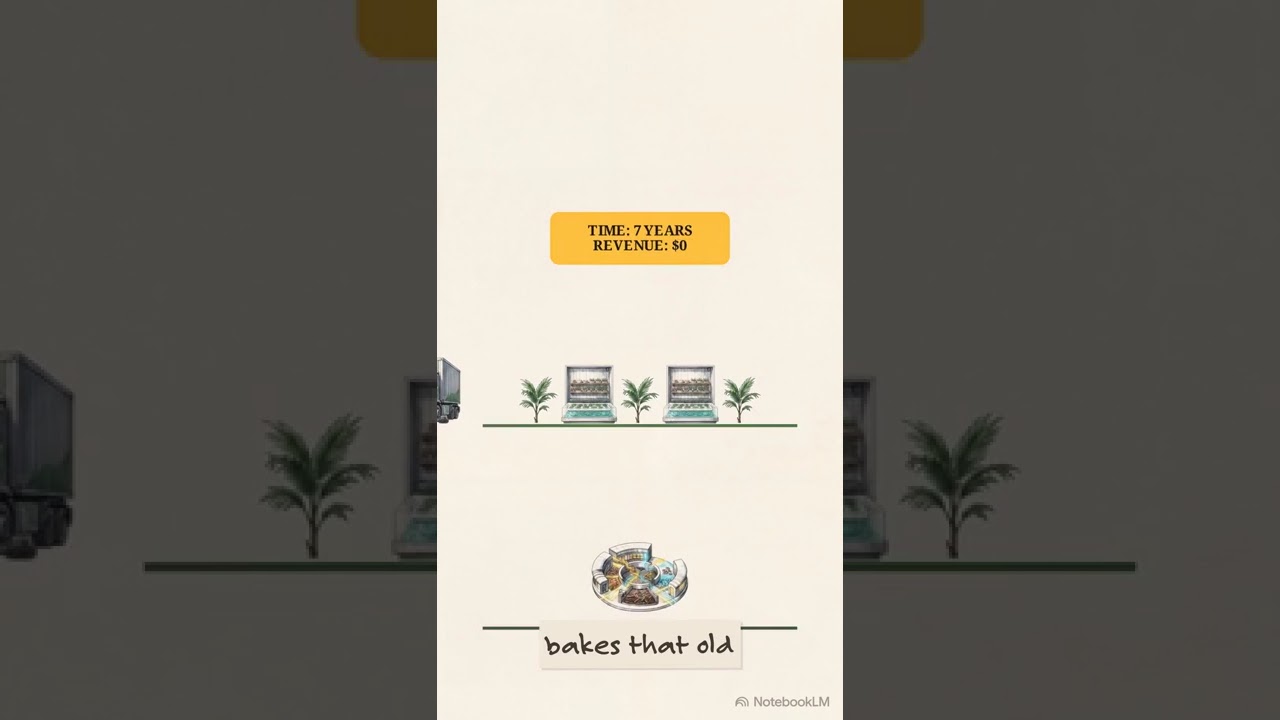
This brings us to the core, unspoken issue that is paralyzing the industry: the income "dead zone." Even if a smallholder magically finds the money to clear the 66-foot trees safely, planting a new palm sapling triggers a brutal 3- to 7-year waiting period.
For up to seven years, that land generates zero meaningful revenue. The farmer still has to feed their family, pay their bills, and maintain the land, but the new trees aren't producing yet. While some attempt to survive by planting traditional cover crops like maize or watermelon, the profit margins are far too thin to sustain a modern family's cost of living. This multi-year poverty trap is the real reason farmers are delaying replanting, driving our aggregate national yield into terminal decline.
[Source: https://www.cspo-watch.com/palm-oil-news-july-2024.html]
The Ecoladang Sovereign Biomass and Micro Farming (EMF) Initiative
To fix this, we need to completely remove the friction for the farmer. Local authorities often suffer from a conservative, "NIMBY" (Not In My Back Yard) mindset—a short-sighted, approach to municipal planning that isolates agriculture from modern infrastructure. We want to introduce a strictly (Smart and Integrated) framework.
We need large-scale, Municipal size Biomass Hubs connected directly to high-tech micro-farming.
Under the Ecoladang Sovereign Biomass and Micro Farming (EMF) initiative, we offer a "Full Service in Time" model. The farmer doesn't have to buy heavy machinery or figure out logistics. They simply open the Ecoladang app and request a clearance service for a cost effective fee that can be subsidized.
EMF deploys a zero-emission fleet of electric tracked excavators and electric heavy-duty haulers (such as Tesla Semis) to the farm. Our teams clear the massive 66-foot trees, load up the trunks and fronds, and haul the valuable waste, for Ecoladang Micro Farms, directly to our centralized Municipal size Biomass Hubs (AgroParks). Because we use electric fleets and avoid all burning, the entire extraction process is 100% clean and fully MSPO/EUDR compliant. When the waste arrives at the AgroPark, the electric trucks roll over drive-on/drive-off dynamic weighbridges, instantly calculating the exact tonnage. The farmer’s digital account is immediately credited with a revenue share or verified Carbon Credits based on their waste. We literally pay them for the rubbish that was suffocating their farm.
[Source: https://www.ofimagazine.com/news/malaysia-looks-to-increase-allocation-to-replant-ageing-oil-palms]
The AgroPark Engine: Thermochemical Conversion
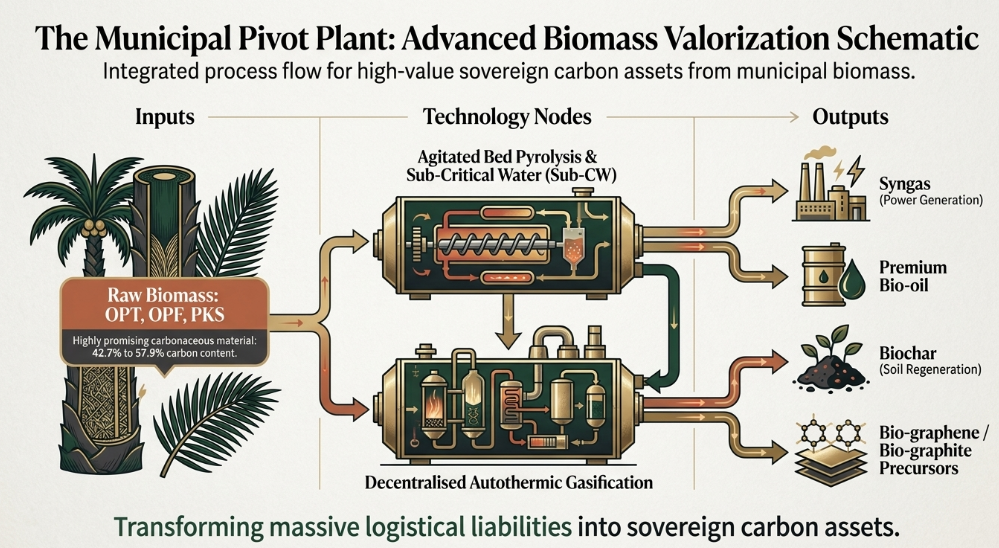
These Municipal size Biomass Hubs are not just dumping grounds; they are highly automated industrial biorefineries. Research from SATREPS (Science and Technology Research Partnership for Sustainable Development) shows that oil palm biomass is packed with value, boasting a carbon content of 42.7% to 57.9%.
Instead of burning it, we "bake" it. The EMF AgroParkutilizes agitated bed pyrolysis reactors (heating the waste to 400°C–800°C in a zero-oxygen environment) and subcritical water (Sub-CW) technologies (using high-pressure water at 300°C as a solvent). This brilliant thermochemical conversion creates massive value for the AgroPark:
- Syngas (Hydrogen + Carbon Monoxide):We route this combustible gas directly into gas turbines to generate massive amounts of clean electricity.
- Bio-oil:An energy-dense liquid that can be refined into sustainable aviation fuel (SAF) or green diesel.
- Biochar & Activated Carbon:We create highly porous biochar (which we give back to the farmer to heal their soil) and premium Activated Carbon for industrial filtration and battery manufacturing.
[Source: https://www.sciencedirect.com/science/article/abs/pii/S0959652615005697]
Bridging the Income Gap: Enter the AgroShack
While the AgroPark is busy turning waste into power, what happens to the farmer who is staring at an empty, cleared field? This is where the magic of Ecoladang happens.
On the exact same trip that our electric Tesla Semis haul away the rotting palm trunks, they drop off our modular, pre-fabricated micro-farming units called AgroShacks onto the newly cleared land.
Instead of suffering through 7 years of zero income, the farmer immediately transitions into a highly profitable franchisee. They host a cluster of AgroShackson their land while their new palm saplings quietly grow in the background. The farmer earns an immediate, diversified income by operating these units, transforming their 5 to 40 hectares into a high-tech agricultural nexus.
[Source: https://www.cspo-watch.com/palm-oil-news-july-2024.html]
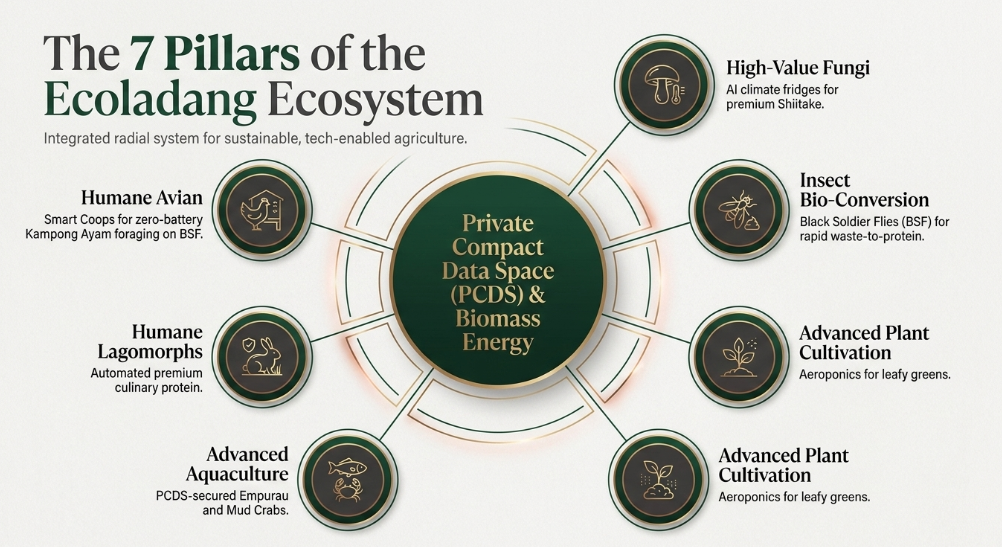
The 7 Pillars of the Ecoladang Ecosystem
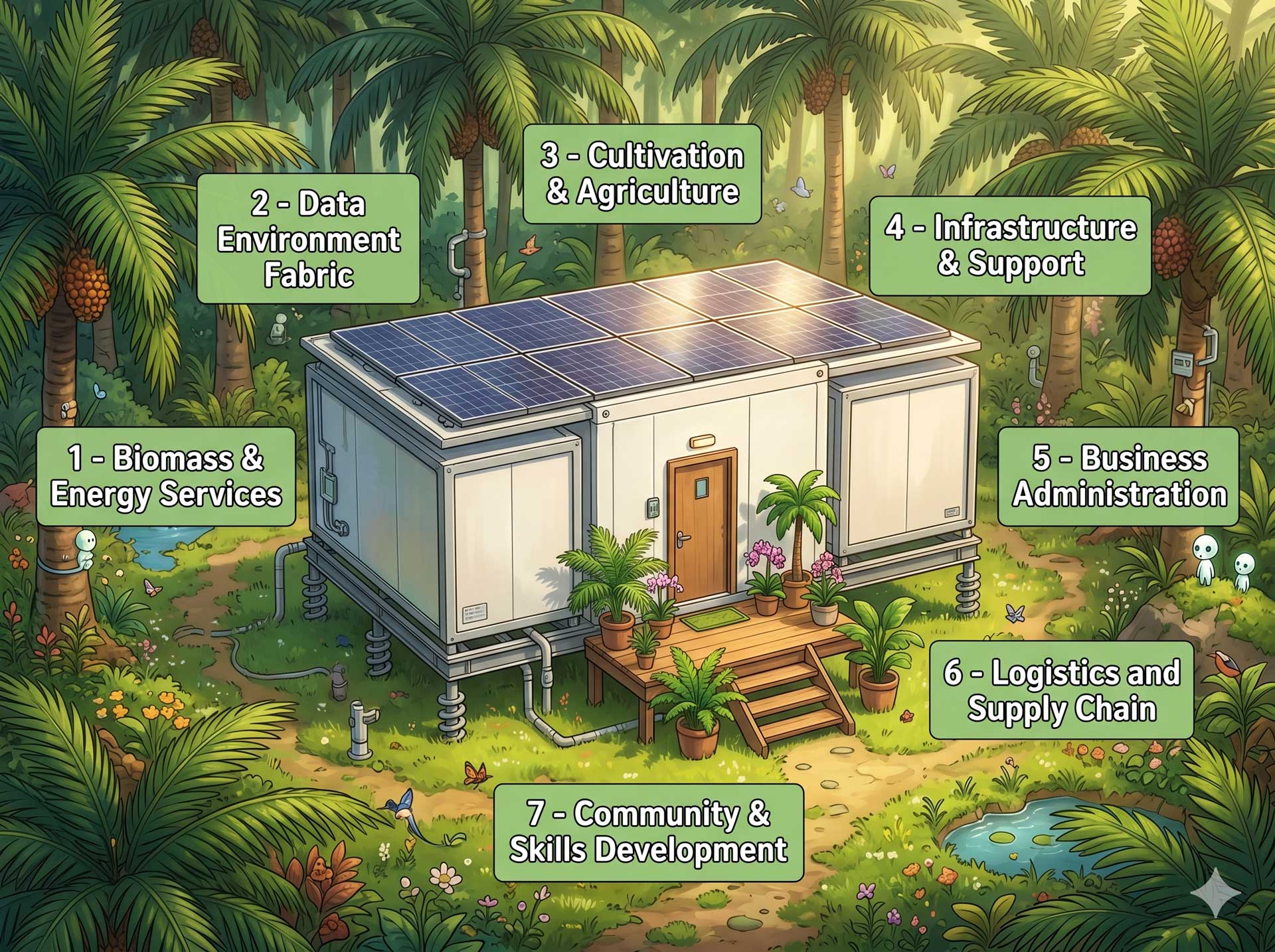
To ensure these AgroShacks never fail, the Municipal size AgroPark Hub incorporates the full weight of the EMF services, structured across our 7 integrated pillars:
1. Power (Biomass Energy): Farms usually fail because of grid reliance. Our AgroShacks are powered directly by the off-grid renewable electricity generated from the Syngas at the Municipal size Biomass Hub. The waste from the farm quite literally keeps the lights on and the water pumping.
2. SAIN Compute (Sovereign Data): Every AgroShack network is managed by the Sovereign Agro-Intelligence Node (SAIN). This hardened, on-site edge AI server acts as the brain of the farm. It autonomously manages the climate, water, and security of the AgroShacks. Because it has excess compute capacity powered by our off-grid syngas, the SAIN also generates revenue by processing sovereign AI tasks globally—turning rural farmers into digital "Data Farmers".
3.Cultivation (The Closed-Loop Food System):The AgroShacks house a master biological loop featuring several types of high-yield crops:
- Mushroom Farming: AI-managed climate fridges grow premium Shiitake and Oyster mushrooms. We even use on-site vacuum-frying to turn them into highly profitable, shelf-stable crispy snacks.
- Insect Farming (BSFL): Black Soldier Flies eat the spent mushroom waste, breeding rapidly to create zero-cost, high-protein feed.
- Humane Avian & Lagomorph Cultivation: Free-range heritage Kampung chickens and ethically raised rabbits are fed the BSFL protein, eliminating expensive commercial feed costs.
- Advanced Aquaculture: Premium mud crabs and fish are raised in vertical aquatic compartments, with SAIN managing the water quality perfectly.
- Advanced Plant Cultivation:The nutrient-rich wastewater from the fish and rabbits fertilizes our high-density aeroponic and hydroponic leafy greens.
4. Infrastructure: We bring Site Reliability Engineering (SRE) to the jungle. We utilize a strict 3-Tier hardware architecture that physically separates life-support water pumps (Tier 1 PLCs) from experimental IT networks (Tier 3) so the farm never crashes. The pillar also includes our on-site Technical Workshops run by a Foreman Franchisee, providing instant civil engineering, electrical, and mechanical repairs so the farmer never has to wait for a part from the city.
5. Business Systems: Franchisees don't need an MBA to succeed. Our SAIN edge servers provide a Unified Operations Platform (UOP) loaded with AI-driven Standard Operating Procedures (SOPs), automated accounting, and real-time inventory tracking, removing all the administrative friction.
6. Logistics:Our zero-emission Tesla fleet doesn't just haul waste to the AgroPark; it also utilizes SAIN-tracked cold-chain logistics to transport the farmer's premium mushrooms, crabs, and vegetables directly to high-paying urban markets. It is automated "couch management" fulfillment.
7.Communities:Finally, the AgroPark and AgroShacks act as Technical and Vocational Education and Training (TVET) hubs. We aren't just growing food; we are reversing rural brain drain. We teach local youth how to maintain electric vehicles, manage data centers, and engineer advanced hydroponic systems, creating generational wealth and high-paying green jobs.
A Call to Action for Malaysia
By combining our frictionless clearing services, the massive thermochemical engines of the Municipal size AgroPark Hubs, and the instant, diversified income of the AgroShacks, Ecoladang Micro Farmsis providing a complete, turnkey solution.
We are directly aligning with the Ministry of Plantation and Commodities’ National Biomass Action Plan 2023–2030, actively driving toward the target of RM17 billion in economic value, 33,000 high-value jobs, and a reduction of 30 million tons of CO2 equivalent by 2030.
It is time to move past the silo mentality and embrace a sovereign, integrated future. With EMF, we can cure the 7-year income dead zone, revitalize our 450,000 independent smallholders, and turn a US$3 billion crisis into Malaysia's greatest agricultural triumph.
Complete List of Sources Consulted:
- Aging palm oil trees in Asia could cause supply deficit (Czapp) - [https://www.czapp.com/analyst-insights/aging-palm-oil-trees-in-asia-could-cause-supply-deficit/]
- Old trees, ageing farmers worsen outlook for top palm oil exporters (Reuters) - [https://www.reuters.com/business/environment/old-trees-ageing-farmers-worsen-outlook-top-palm-oil-exporters-2025-08-04/]
- Technical knowledge remains the biggest hurdle for independent palm oil smallholders to comply with EUDR (Eco-Business) - [https://www.eco-business.com/news/technical-knowledge-remains-the-biggest-hurdle-for-independent-palm-oil-smallholders-to-comply-with-eudr/]
- Ganoderma threatening palm plantations in Malaysia and RI (GAPKI) - [https://gapki.id/en/news/2025/09/08/ganoderma-threatening-palm-plantations-in-malaysia-and-ri/]
- Malaysia looks to increase allocation to replant ageing oil palms (OFI Magazine) - [https://www.ofimagazine.com/news/malaysia-looks-to-increase-allocation-to-replant-ageing-oil-palms]
- Palm Oil News July 2024 (CSPO Watch) - [https://www.cspo-watch.com/palm-oil-news-july-2024.html]
- National Biomass Action Plan 2023-2030 (KPK) - [https://www.kpk.gov.my/kpk/images/mpi_biomass/27122023-National_Biomass_Action_Plan.pdf]
- Investigation of yields and qualities of pyrolysis products obtained from oil palm biomass (ScienceDirect) - [https://www.sciencedirect.com/science/article/abs/pii/S0959652615005697]
- Malaysia’s ageing oil palm plantations to hit 2 million hectares by 2027 (The Straits Times) - [https://www.straitstimes.com/asia/se-asia/malaysias-ageing-palm-oil-plantations-to-hit-2-million-hectares-by-2027]
- A Concise Guide To The European Union Deforestation Regulation (EUDR) (MPOC) - [https://www.mpoc.org.my/eudr-central-info/]
- Palm Pulverisation in Sustainable Oil Palm Replanting (tandfonline) - [https://www.tandfonline.com/doi/abs/10.1626/pps.8.345]
- Oryctes rhinoceros (Coleoptera: Scarabaeidae) as a key pest of oil palm: a systematic review of its biology, establishment, and integrated management strategies in Malaysia(Esciencepress) - [https://esciencepress.net/journals/PP/article/view/5961]
- Palm Oil News - July 2024 (Cspo-watch) [https://www.cspo-watch.com/palm-oil-news-july-2024.html]
- Improved yield and higher heating value of biochar from oil palm biomass at low retention time under self-sustained carbonization (Sciencedirect) - [https://www.sciencedirect.com/science/article/abs/pii/S0959652615005697]
- Sub-critical water as a green solvent for production of valuable materials from agricultural waste biomass: A review of recent work (Gjesm) - [https://www.gjesm.net/article_12393.html]
- Sub-critical water as a green solvent for production of valuable materials from agricultural waste biomass: A review of recent work (UPM) - [http://psasir.upm.edu.my/id/eprint/77758/1/FK%202019%2057%20ir.pdf]
- Palm oil production: Crisis lurks as replanting lags (PWC) - [https://www.pwc.com/id/en/pwc-publications/industries-publications/consumer-and-industrial-products-and-services/plantation-highlights/october-2023/palm-oil-production-crisis-lurks-as-replanting-lags.html]
Here is a report of the text above provided by Google Gemini for reference.
Ecoladang: A Strategic Response to Malaysia’s US$3 Billion Palm Oil Demographic Cliff
Executive Summary
The Malaysian palm oil industry is currently confronting a critical "demographic cliff" estimated to cost US$3 billion. As oil palms reach the end of their 25-year commercial lifespans, yields are plummeting, and harvesting conditions are becoming increasingly hazardous. The primary barrier to renewal is the "replanting trap"—a 3-to-7-year "dead zone" where independent smallholders face a near-total loss of income while new saplings mature. Furthermore, strict environmental mandates under the Malaysian Sustainable Palm Oil (MSPO) scheme and the European Union Deforestation Regulation (EUDR) have rendered traditional clearing methods illegal.
The Ecoladang Sovereign Biomass & Micro-Farm Initiative presents a systemic solution by transitioning smallholders into high-profit franchisees. This model utilizes a zero-emission logistics fleet to extract biomass, centralized municipal hubs for thermochemical conversion, and the deployment of "AgriShacks"—modular, AI-managed units that provide immediate, diverse revenue streams. Aligned with the National Biomass Action Plan 2023-2030, the initiative aims to generate RM 17 billion in economic value, create 33,000 jobs, and reduce greenhouse gas (GHG) emissions by 30 million tCO2eq by 2030.
The Palm Oil Crisis: The "Replanting Trap"
The Southeast Asian palm oil sector is hindered by aging plantations and a lack of viable renewal strategies for independent smallholders, who typically operate on plots averaging two hectares.
The Replanting Dead Zone
- Income Drought: Replanting triggers a 3-to-7-year period before new trees become commercially viable. For smallholders, this represents a brutal economic drought.
- Physical Hazards: Maturing palms can reach heights of a 12-storey building, making harvesting dangerous and yields difficult to maintain.
- Resource Management: Leaving felled Oil Palm Trunks (OPT) and Oil Palm Fronds (OPF) to rot is not a viable option as it occupies planting space, breeds soil-borne diseases, and releases significant GHG emissions.
Regulatory and Financial Barriers
- Zero-Burn Mandate: While large estates use "zero-burn" mechanical pulverization to recycle nutrients, the heavy machinery required is financially inaccessible for smallholders.
- Compliance Pressures: Roughly 90% of planted areas are certified under MSPO. Compliance with EUDR is now a necessity, making traditional slash-and-burn tactics illegal and obsolete.
The Ecoladang Solution: Infrastructure and Logistics
Ecoladang acts as a National Green Infrastructure Service, providing a centralized model for land clearing and biomass processing that adheres to international environmental standards.
Zero-Emission Logistics
The initiative utilizes a "Grab for Biomass" digital application to coordinate land clearing.
- Logistics Fleet: Deployment of fully electric Tesla Semis and heavy excavators ensures a 100% clean, EUDR-compliant extraction process.
- Municipal Pivot Plants: Centralized hubs utilize dynamic weighbridges to instantly allocate revenue shares or carbon-credit yields to farmers based on the tonnage of waste provided.
Advanced Thermochemical Conversion
Research indicates that oil palm biomass contains a high carbon content (42.7% to 57.9%). Ecoladang facilities utilize agitated bed pyrolysis reactors and sub-critical water (Sub-CW) technologies to convert waste into high-value outputs:
| Output | Application/Value |
| Syngas | High-value gas for power generation. |
| Bio-oil | Premium fuel source. |
| Biochar & Activated Carbon | Highly porous materials used to heal depleted soils. |
| Advanced Materials | Precursors for bio-graphite and bio-graphene for manufacturing. |
The 7 Pillars of the Ecoladang Ecosystem
To eliminate the 3-to-7-year income gap, Ecoladang deploys modular AgriShacks managed by a Sovereign Agro-Intelligence Node. These units allow farmers to transition into profitable franchisees immediately upon land clearing.
- High-Value Fungi Cultivation: AI-managed climate fridges produce premium Shiitake and Oyster mushrooms. Vacuum-frying processing nodes allow for the production of value-added retail snacks.
- Insect Bio-Conversion (BSF): Breeding Black Soldier Flies to convert agricultural waste into high-protein live feed for livestock and pets.
- Advanced Plant Cultivation: Utilizing aeroponics and hydroponics for pesticide-free, rapid-cycle leafy greens and botanicals.
- Advanced Aquaculture: High-density vertical farming of premium species such as Empurau and mud crabs, featuring PCDS-secured water quality management.
- Humane Lagomorph Cultivation: Automated, ethical rabbit farming for premium culinary protein using stainless steel cages and wire hoop runs.
- Humane Avian Cultivation: "Smart Coops" for Kampong Ayam (heritage chicken) that allow chickens to forage on BSF insects, adhering to zero-battery-cage standards.
- Biomass Energy & Sovereign Data: The foundational pillar. Municipal hubs process waste into biochar for soil regeneration, while the SAIN manages biological nodes and offers sovereign compute services.
Technological Governance and Sovereign Wealth
The initiative is underpinned by advanced data and AI systems that ensure operational efficiency and national data sovereignty.
Sovereign Artificial Intelligence Spaces (SAIN)
The operation is governed by on-site, hardened mini AI Data Centers. These systems manage the farms through real-time AI-driven Standard Operating Procedures (SOPs). Beyond management, these centers generate revenue by offering sovereign compute services globally.
Sovereign Agro-Intelligence Node (SAIN)
The PCDS autonomously manages all biological nodes within the AgriShack. It serves as an internal enterprise utility ledger for transparent supply-chain auditing and B2B operational accounting.
National Impact and Strategic Alignment
Ecoladang is designed to support Malaysia's National Biomass Action Plan 2023-2030 and address national food security.
- Economic Value: Targeted generation of RM 17 billion in economic value.
- Job Creation: Anticipated creation of 33,000 new jobs.
- Environmental Impact: A projected reduction of GHG emissions by 30 million tCO2eq by 2030.
- Global Positioning: By aligning with international SATREPS (Science and Technology Research Partnership for Sustainable Development) efforts, the initiative transforms agricultural waste into biogas and biodegradable materials, positioning Malaysia as a leader in green infrastructure.
Conclusion: Ecoladang transforms a US$3 billion demographic crisis into a generational wealth opportunity by providing smallholders with a pathway to economic sovereignty while ensuring the Malaysian palm oil industry remains environmentally compliant and globally competitive.
Bahasa Melayu
Hab AgroPark Malaysia: Menyelesaikan Krisis Penanaman Semula Kelapa Sawit Bernilai US$3 Bilion
(Analisis Semakan Fakta dan Diperkayakan)
Ringkasan Eksekutif: Jurang Demografi dan Produktiviti yang Mengancam
Sektor kelapa sawit Malaysia, tulang belakang ekonomi luar bandar dan penyumbang eksport utama (penyumbang ketiga terbesar), menghadapi cabaran kritikal dengan ladang kelapa sawit (Elaeis guineensis) yang telah tua. Berjuta-juta hektar telah mencapai atau melebihi jangka hayat komersial optimum iaitu 25-30 tahun. Pokok yang berumur lebih 25-30 tahun tumbuh tinggi (selalunya >18-20 meter), menjadikan penuaian berbahaya dan memerlukan buruh yang intensif, manakala hasil menurun kerana tenaga pokok lebih tertumpu kepada penyelenggaraan struktur berbanding pengeluaran Tandan Buah Segar (TBS).
Pemilik kecil bebas (independent smallholders) yang mengurus plot biasanya 5-40 hektar paling terkesan. Mereka menyumbang bahagian penting kawasan tanaman (anggaran berbeza: pemilik kecil bebas ~16-17% atau ~1 juta ha; pemilik kecil secara keseluruhan termasuk terancang ~26-40% bergantung definisi dan sumber data). Kadar penanaman semula lambat, dengan purata kebangsaan ~2% dalam tahun-tahun kebelakangan (di bawah sasaran ideal 4-5%), berbanding aktiviti yang lebih tinggi atau tekanan berbeza di Indonesia. Menjelang 2027, ladang tua (>19 tahun) boleh mencapai ~2 juta hektar (~35% daripada keseluruhan).
Keperluan modal anggaran untuk penanaman semula secara menyeluruh adalah sekitar US$3 bilion (RM14+ bilion pada kos purata ~RM20,000/ha), yang menimbulkan risiko kepada hasil kebangsaan, penggunaan kilang, industri hiliran, eksport dan mata pencarian luar bandar. Penanaman semula yang rendah meningkatkan kerentanan terhadap perosak dan penyakit serta berisiko menyebabkan Malaysia ketinggalan di pasaran global di mana Indonesia mendahului dari segi volum.
1. Perangkap Penanaman Semula: Halangan Peraturan, Ekonomi dan Agronomi & Jurang Pendapatan Bertahun-tahun
Estet besar boleh mengurus penanaman semula secara berperingkat, tetapi pemilik kecil menghadapi kesukaran. Kaedah tebang bakar tradisional kini dilarang di bawah skim MSPO (wajib, meliputi kebanyakan kawasan tanaman) dan peraturan antarabangsa seperti EUDR yang menekankan tiada penebangan hutan dan kebolehkesanan.
Kaedah zero-burn yang patuh (tebang, keping, susun baris) memerlukan modal tinggi bagi pemilik kecil yang tidak mempunyai akses kepada jentera. Membiarkan Batang Kelapa Sawit (OPT) dan Pelepah (OPF) reput di tapak menyebabkan masalah:
- Tempat pembiakan perosak: Batang yang reput membiak Oryctes rhinoceros (kumbang badak), perosak utama pada tanaman muda.
- Penyebaran penyakit: Menggalakkan Ganoderma boninense (Reput Pangkal Batang - BSR) yang boleh mengurangkan hasil dengan ketara dan menjejaskan anak pokok baharu (sehingga 60% potensi kehilangan TBS dalam kes teruk di Malaysia).
- Pepejalan: Penguraian anaerobik perlahan melepaskan CH₄ dan CO₂.
Masalah teras ekonomi ialah "zon mati" 3-7+ tahun (jurang pendapatan). Pokok baharu mengambil ~3 tahun untuk mengeluarkan hasil bermakna dan lebih lama untuk mencapai puncak, menyebabkan hasil pendapatan hampir sifar. Tanaman sampingan menawarkan margin tipis berbanding kos sara hidup. Ini melambatkan penanaman semula, mengancam output negara (potensi +2.5 juta tan setahun dengan kadar lebih baik) dan rantaian bekalan.
Fakta tambahan untuk pihak kerajaan Malaysia:
Penanaman semula yang rendah menyumbang kepada hasil yang stagnan, kilang kurang digunakan, risiko keselamatan makanan, pekerjaan luar bandar (~450,000 pemilik kecil bebas), dan hasil kerajaan/cukai daripada eksport (>RM120 bilion baru-baru ini). Petani yang semakin tua memperburukkan keadaan. Menyelaraskan dengan matlamat Pelan Tindakan Biomas Kebangsaan (RM17 bilion nilai, 33,000 pekerjaan hijau, mitigasi 30 juta tCO₂e menjelang 2030) melalui penggunaan biomas bernilai tambah menyokong ekonomi kitaran dan aspirasi sifar bersih.
2. Inisiatif Biomass Berdaulat dan Pertanian Mikro Ecoladang (EMF) – Model Perkhidmatan Penuh
Model EMF menawarkan penyelesaian bersepadu dan patuh yang selaras dengan Pelan Tindakan Biomas Kebangsaan KPK 2023–2030. Ia menyediakan pembersihan tanpa pelepasan, penilaian biomas di hab berskala perbandaran, pendapatan interim petani melalui ladang mikro, dan kredit karbon.
Kerangka Logistik (melalui aplikasi Ecoladang):
- Gunakan penggali trek elektrik dan pengangkut untuk pengekstrakan bersih (patuh EUDR/MSPO).
- Tuai biomas OPT/OPF dan bukannya dibiarkan reput di tapak.
- Angkut ke Hab AgroPark berpusat dengan timbangan.
- Kreditkan petani melalui bahagian hasil atau kredit karbon yang disahkan berdasarkan karbon biogenik (kandungan karbon biomas kelapa sawit ~42.7-57.9%).
Cadangan Perkhidmatan Pembersihan: Pasukan EMF mengendalikan pembersihan tapak dan pemasangan AgroShack, mengurangkan geseran dan kos pendahuluan bagi pemilik kecil. Ini membolehkan penanaman semula lebih pantas sambil menjana pendapatan sampingan segera.
3. Penukaran Termokimia Perindustrian di Hab AgroPark Skala Perbandaran
Hab berfungsi sebagai biorefinari menggunakan pirolisis (reaktor katil teraduk, 400-800°C, persekitaran tanpa oksigen) dan pemprosesan air subkritikal (Sub-CW, sehingga ~300°C, tekanan tinggi) untuk menukar biomas tanpa asid menghakis atau enzim mahal.
Laluan dan Output Utama (disokong penyelidikan SATREPS dan UPM):
- Syngas (H₂ + CO) → Turbin gas untuk kuasa bersih (dalam tapak + eksport grid TNB).
- Bio-minyak → Hydrotreating untuk Bahan Api Penerbangan Lestari (SAF) dan diesel hijau.
- Biochar → Penambah tanah (pengekalan nutrien, penindasan penyakit, penyerapan karbon), karbon teraktif, atau biografit untuk bateri.
Ini mengalihkan sisa daripada pereputan/pepejalan, mencipta produk bernilai tinggi, dan mengembalikan biochar ke ladang untuk penambahbaikan hasil dan kesihatan tanah — kritikal untuk produktiviti kelapa sawit jangka panjang dan matlamat iklim.
4. Menjambatani Jurang Pendapatan: AgroShack dan Ladang Mikro Ecoladang Gelung Tertutup
Pada perjalanan logistik yang sama, unit AgroShack modular (pra-fabrikasi, diuruskan AI melalui Sovereign Agro-Intelligence Node - SAIN untuk pengkomputeran pinggir dan ketahanan AI setempat) dipasang di bahagian tanah yang telah dibersihkan. Ini menyediakan pendapatan pelbagai semasa tempoh tidak matang pokok kelapa sawit 3-7 tahun tanpa bersaing dengan pokok masa depan. Petani menjadi tuan rumah unit, memperoleh pendapatan daripada operasi sementara pokok baharu tumbuh. Kuasa luar grid daripada syngas/solar hab.
Tujuh Pilihan Bersepadu (sinergi gelung tertutup: sisa kulat → BSFL → makanan/ baja → akuaponik/pertanian menegak dll.):
- Penanaman kulat premium (cth. tiram, shiitake) + penggorengan vakum untuk snek premium.
- Biopenukaran BSFL untuk protein dan frass.
- Pertanian menegak aeroponik/hidroponik (sayur-sayuran, herba perubatan).
- Akuakultur RAS (cth. Empurau, ketam lumpur).
- Arnab secara manusiawi.
- Ayam Kampung Pintar (ditambah dengan larva BSFL).
- Tenaga boleh diperbaharui + data (dikuasakan syngas/solar, kedaulatan data).
Ini mengubah pemilik kecil menjadi pengendali agritech, meningkatkan keselamatan makanan tempatan, mencipta pekerjaan dan mempelbagaikan ekonomi luar bandar. Manfaat tambahan: kredit karbon daripada pengalihan biomas/penyerapan melalui biochar, peningkatan pematuhan MSPO/EUDR, serta peningkatan biodiversiti dan kesihatan tanah.
Kesimpulan: Mengubah Krisis Menjadi Kekayaan Hijau Berdaulat
Dengan menggabungkan perkhidmatan pembersihan cekap, hab biomas automatik berskala besar, dan perusahaan mikro agro di ladang, inisiatif EMF menangani halangan penanaman semula secara holistik. Ia mengurangkan jurang penjanaan semula Malaysia-Indonesia, menyokong pemilik kecil (kunci kepada ~26-40% pengeluaran), selaras dengan pelan kebangsaan, menjana hasil/pekerjaan, menyerap karbon, dan memastikan kepimpinan minyak sawit lestari. Kerjasama kerajaan-swasta yang segera (subsidi, insentif, penskalaan hab) boleh mempercepatkan pelaksanaan, melindungi eksport, kemakmuran luar bandar dan matlamat alam sekitar.
Lampiran: Senarai Sumber (Diperluaskan)
- Laporan PwC / industri mengenai kos penanaman semula US$3B.
- Straits Times mengenai ladang tua (~2 juta ha menjelang 2027).
- Reuters / data MPOB mengenai kadar penanaman semula (~2% berbanding sasaran).
- Pelan Tindakan Biomas Kebangsaan 2023-2030 (KPK).
- Kajian SATREPS / UPM mengenai karbon biomas, pirolisis, Sub-CW.
- Kajian mengenai Oryctes, Ganoderma, cabaran zero-burn.
- Statistik MPOB / pemilik kecil dan EUDR/MSPO.
- Tambahan: South China Morning Post (konteks terdahulu), kertas ekonomi kitaran, dll.
Inisiatif Biomass Berdaulat dan Pertanian Mikro Ecoladang (EMF): Penyelesaian Strategik Krisis Replanting Kelapa Sawit Malaysia
Ringkasan Eksekutif
Sektor kelapa sawit Malaysia kini berada di ambang "jurang demografi" dan produktiviti yang kritikal. Dengan anggaran keperluan modal sebanyak US$3 bilion (RM14+ bilion), industri ini bergelut dengan jutaan hektar pokok tua yang mencapai akhir hayat komersialnya (25-30 tahun). Cabaran utama merangkumi kejatuhan hasil, bahaya penuaian secara manual pada ketinggian melebihi 18-20 meter, dan "perangkap penanaman semula" di mana pekebun kecil menghadapi kehilangan pendapatan selama 3 hingga 7 tahun sementara menunggu pokok baru matang.Inisiatif Ecoladang Sovereign Biomass & Micro-Farm (EMF) menawarkan penyelesaian sistemik melalui integrasi teknologi hijau dan ekonomi kitaran. Dengan memanfaatkan armada logistik sifar emisi, hab pemprosesan biomas berskala perbandaran, dan unit pertanian mikro AgroShack yang dipacu kecerdasan buatan (AI), inisiatif ini bertujuan untuk menghapuskan zon mati pendapatan petani. Sejajar dengan Pelan Tindakan Biomas Kebangsaan 2023-2030, model ini disasarkan untuk menjana nilai ekonomi sebanyak RM17 bilion, mewujudkan 33,000 pekerjaan berkualiti tinggi, dan mengurangkan pelepasan gas rumah hijau sebanyak 30 juta tCO2e menjelang tahun 2030.
1. Analisis Krisis: Jurang Demografi dan Perangkap Penanaman Semula
Industri kelapa sawit Malaysia, yang menyumbang lebih RM120 bilion dalam pendapatan eksport, sedang menghadapi penurunan produktiviti yang ketara disebabkan oleh faktor-faktor berikut:
- Penuaan Pokok: Pokok kelapa sawit yang melebihi 25 tahun tumbuh terlalu tinggi (melebihi 66 kaki), menyebabkan penuaian menjadi sangat berbahaya dan intensif buruh. Tenaga pokok juga dialihkan untuk mengekalkan struktur batang berbanding menghasilkan Tandan Buah Segar (TBS).
- Kadar Penanaman Semula yang Lembap: Kadar semasa hanya sekitar 2%, jauh di bawah sasaran ideal 4% hingga 5%. Menjelang 2027, dianggarkan 2 juta hektar ladang akan dikategorikan sebagai pokok tua.
- Zon Mati Pendapatan (7 Tahun): Selepas penebangan, pokok baru mengambil masa 3 hingga 7 tahun untuk menghasilkan pendapatan. Bagi 450,000 pekebun kecil bebas, tempoh tanpa pendapatan ini adalah halangan utama yang menghalang mereka daripada melakukan penanaman semula.
- Persaingan Global: Kegagalan menangani krisis ini menyebabkan Malaysia berisiko kehilangan daya saing kepada Indonesia dan menghadapi masalah kilang pemprosesan yang tidak digunakan sepenuhnya (underutilized).
2. Kekangan Peraturan dan Risiko Agronomi
Kaedah tradisional "tebang dan bakar" kini dilarang di bawah skim Malaysian Sustainable Palm Oil (MSPO) dan European Union Deforestation Regulation (EUDR) . Tindakan membiarkan Batang Kelapa Sawit (OPT) reput di ladang juga membawa risiko besar:
- Penyebaran Perosak: Batang yang mereput menjadi sarang pembiakan Oryctes rhinoceros (kumbang badak) yang menyerang anak pokok.
- Penyakit Kulat: Reput kayu menggalakkan serangan Ganoderma boninense (Reput Pangkal Batang) yang boleh memusnahkan sehingga 60% hasil tanaman baru.
- Impak Alam Sekitar: Pereputan anaerobik melepaskan gas metana (CH4) dan karbon dioksida (CO2) dalam jumlah yang besar ke atmosfera.
3. Penyelesaian EMF: Infrastruktur Hijau dan Teknologi Termokimia
Ecoladang memperkenalkan model "Perkhidmatan Penuh Tepat Masa" untuk memudahkan petani:
Logistik Sifar Emisi
- Penggunaan armada elektrik sepenuhnya (termasuk traktor trek elektrik dan Tesla Semi) untuk membersihkan ladang tanpa pembakaran.
- Sistem timbangan dinamik di Hab AgroPark yang membolehkan petani menerima kredit pendapatan atau Kredit Karbon secara serta-merta berdasarkan tonaj biomas yang dihantar.
Hab Biomas Berskala Perbandaran (AgroPark)
Biomas kelapa sawit yang mempunyai kandungan karbon tinggi (42.7% - 57.9%) diproses menggunakan teknologi canggih:
- Pirolisis Reaktor Katil Teraduk: Memanaskan sisa pada suhu 400°C–800°C tanpa oksigen.
- Teknologi Air Subkritikal (Sub-CW): Menggunakan air bertekanan tinggi sebagai pelarut hijau.Hasil Pengeluaran Hab Biomas: | Produk | Kegunaan Utama | | :--- | :--- | | Syngas | Menjana elektrik bersih melalui turbin gas untuk kegunaan off-grid. | | Bio-oil | Bahan api berketumpatan tenaga tinggi untuk diesel hijau atau bahan api penerbangan lestari (SAF). | | Biochar/Karbon Teraktif | Pemulihan kesihatan tanah dan komponen pembuatan bateri atau penapisan industri. |
4. Merapatkan Jurang Pendapatan melalui AgroShack
Inovasi utama Ecoladang adalah penggunaan AgroShack , iaitu unit pertanian mikro pasang siap yang dihantar ke ladang sejurus selepas pembersihan dilakukan. Ini membolehkan petani menjana pendapatan segera sementara menunggu pokok sawit membesar.
Sistem Pertanian Gelung Tertutup (Closed-Loop)
Pertanian mikro ini diuruskan oleh Sovereign Agro-Intelligence Node (SAIN) yang menyepadukan pelbagai rantaian biologi:
- Penanaman Cendawan: Kawalan iklim AI untuk pengeluaran cendawan Shiitake dan Tiram premium yang diproses menjadi snek goreng vakum.
- Penternakan Serangga (BSFL): Larva Black Soldier Fly menukar sisa cendawan menjadi protein makanan ternakan kos sifar.
- Akuakultur & Penternakan Haiwan: Penternakan ketam nipah, ikan, ayam kampung, dan arnab secara beretika. Sisa nutrien daripada haiwan digunakan sebagai baja untuk sistem aeroponik/hidroponik.
5. Kedaulatan Data dan Masa Depan Digital Luar Bandar
Selain pertanian, inisiatif EMF menyentuh aspek teknologi maklumat untuk mengurangkan penghijrahan belia luar bandar:
- Penyimpanan Data Berdaulat: Server SAIN di ladang berfungsi sebagai pusat data pinggir (edge computing) yang menawarkan perkhidmatan pemprosesan AI secara global, menjadikan petani sebagai "Petani Data".
- Pembangunan TVET: Hab AgroPark bertindak sebagai pusat latihan teknikal untuk mengajar belia tempatan mengenai penyelenggaraan kenderaan elektrik (EV), pengurusan pusat data, dan kejuruteraan sistem hidroponik maju.
6. Kesimpulan dan Seruan Bertindak
Inisiatif Ecoladang EMF bukan sekadar projek pertanian, tetapi transformasi infrastruktur nasional yang menukar krisis bernilai US$3 bilion kepada peluang kekayaan generasi. Dengan menyelaraskan operasi dengan Pelan Tindakan Biomas Kebangsaan 2023–2030 , Malaysia berupaya:
- Memulihkan kedaulatan ekonomi 450,000 pekebun kecil.
- Memastikan pematuhan penuh terhadap piawaian antarabangsa (MSPO/EUDR).
- Menghapuskan "zon mati" pendapatan melalui diversifikasi teknologi tinggi.Pendekatan bersepadu ini adalah kunci untuk memastikan industri kelapa sawit Malaysia kekal sebagai peneraju global yang lestari, berdaya saing, dan berdaya tahan terhadap cabaran masa hadapan.