The AgriShack: 3-Tier Enterprise Hardware Architecture
The Edge Infrastructure Business Model
AI Summary:Sensors & 3-Tier Enterprise Hardware Architecture
How Ecoladang utilizes enterprise Site Reliability Engineering (SRE) to guarantee zero-downtime micro-farming:
The Core Mission - Enterprise Reliability: We reject fragile consumer agricultural tech. We approach micro-farming with strict IT/OT (Information Technology / Operational Technology) convergence and fault-domain isolation, turning farms into highly secure, de-risked, and investable assets.
The 3-Tier Hardware Architecture: Our infrastructure is divided into three strictly isolated layers. Tier 1 (The Backbone) utilizes hardwired, indestructible industrial PLCs for mission-critical life support and climate control. Tier 2 (The Field Network)uses long-range LoRaWAN for wide-area monitoring. Tier 3 (The Sandbox) uses Zigbee for safe, segregated R&D experimentation without risking core farming operations.
High-Availability Edge Compute: Every "AgriShack Collection" is powered by a localized, multi-node Proxmox Edge Compute Cluster to ensure seamless failover if physical hardware crashes . We manage the entire fleet's configuration remotely and securely using Ansible (GitOps).
Predictive AI & Hardwired Security: We utilize dedicated edge AI nodes to run local Large Language Models (LLMs) that analyze sensor telemetry for predictive maintenance . Security is handled via hardwired PoE cameras and Frigate NVR, accelerated by Google Coral TPUs for real-time, highly accurate object and threat detection.
The 3-Tier Architecture
- Frictionless Collaboration: The AgriShack is designed to be an open sandbox for innovation without compromising core operations. When a customer, franchise operator, or academic partner wishes to run a novel crop experiment, we issue them a secure API key and access to a read-only MQTT data stream. This cryptographic isolation ensures that external researchers can harvest massive amounts of real-time data, but cannot accidentally shut off a critical irrigation loop or alter life-support systems.
- Fundamentally De-Risked Investability: When we discuss franchise structures and funding strategies with stakeholders, the conversation is grounded in physical and digital security. The AgriShack presents a hardened, three-tiered operational model that proves our physical assets are shielded from environmental volatility, cyber vulnerabilities, and localized compute failures.
- Zero-Panic Maintenance & Blast-Radius Control: Agricultural operations run 24/7, and our infrastructure is designed to prevent midnight emergencies. If a non-critical Tier 3 sensor (such as a generic Zigbee light monitor) fails in the field, or if a user-generated script crashes a local sandbox, it simply triggers a low-priority maintenance alert. Because our network is strictly segmented, this failure cannot cascade. The farm continues operating perfectly on its deterministic, hardwired core, ensuring total reliability and peace of mind.
The Closed-Loop AI Automation Pipeline
- Data Extraction & Baseline Comparison (Graylog): All sensor telemetry from the farm is fed into Graylog pipelines. We utilize advanced pipeline regex to extract key operational parameters, formulating a precise dataset. This real-time dataset is continuously compared against our established operational baselines to monitor the health of the micro-farm.
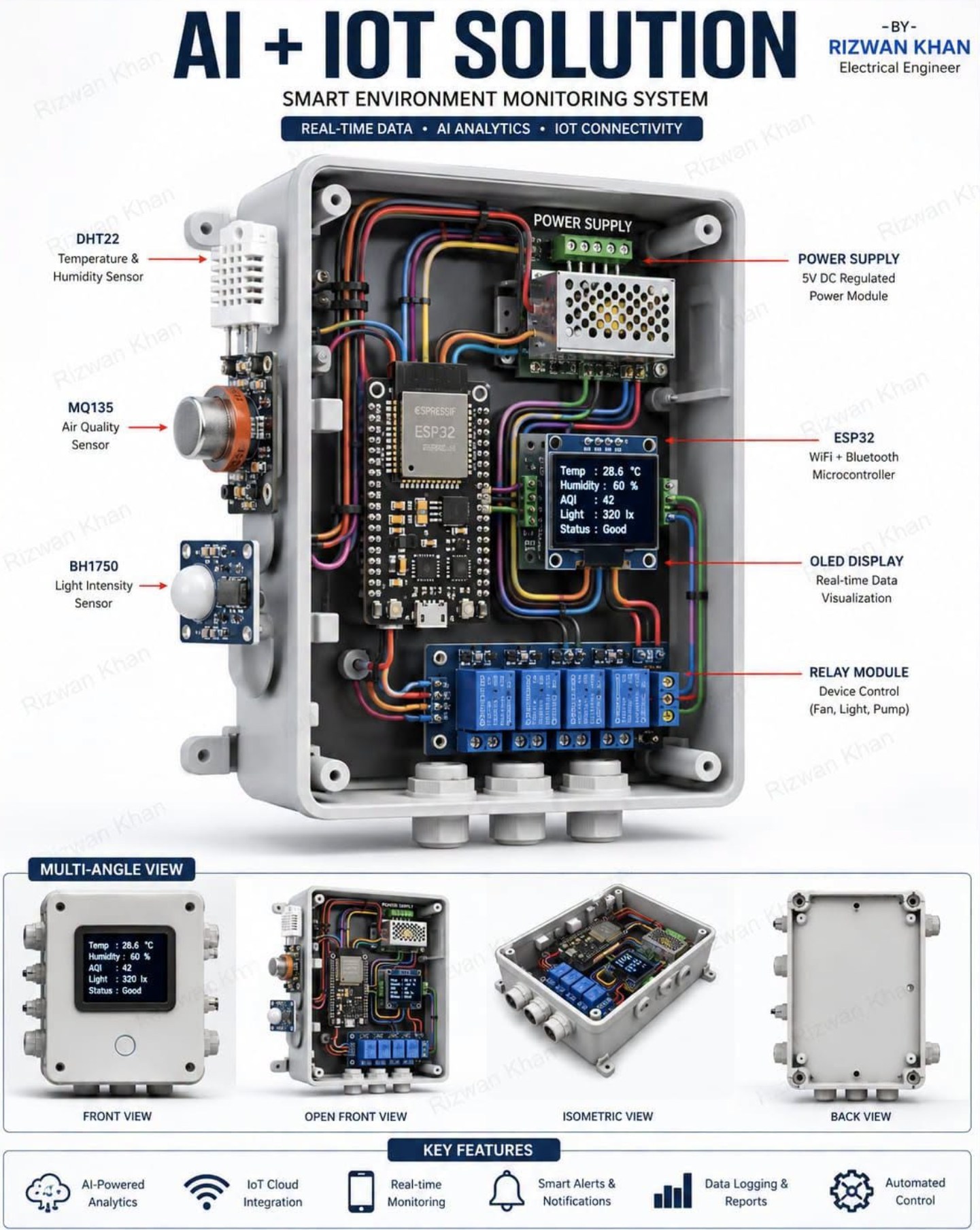
- LLM Anomaly Investigation: If a deviation from the baseline is detected, the dataset is routed via LMlink directly into a dedicated host node running LM Studio. Here, a locally hosted Large Language Model (LLM) takes over, analyzing the telemetry streams for complex pattern recognition and hidden anomalies that standard logic gates might miss.
- Syslog Feedback & Auditing: Once the LLM investigates the deviation and generates a diagnostic report, this output is sent back to Graylog as a syslog. This ensures every AI decision is securely processed, logged, and available for future auditing.
- Automated Action via Home Automation: If the LLM's investigation determines that physical intervention is required, the output is instantly routed to our Home Automation core (Home Assistant). The system then automatically executes the corrective action through the appropriate hardware tier:
-Tier 1 (Mission-Critical OT):Routing commands to hardwired industrial PLCs via RS-485 Modbus RTU for immediate, life-critical climate or irrigation adjustments.
- Tier 2 (The Field Network):Triggering long-range actions via LoRaWAN gateways to adjust distant field equipment.
- Tier 3 (The Sandbox): Utilizing Zigbee 3.0 networks to safely automate non-critical peripheral devices or experimental environments .
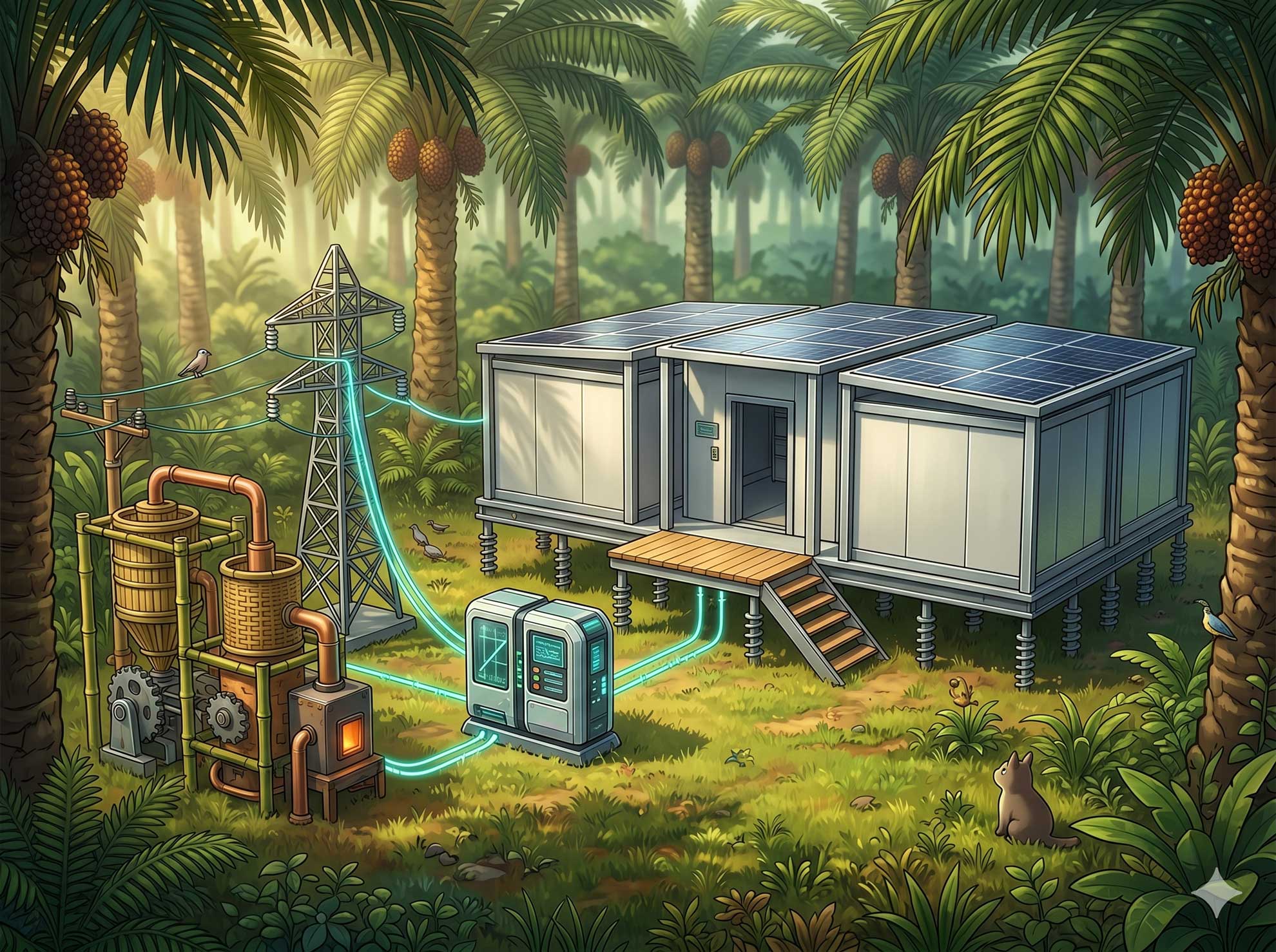
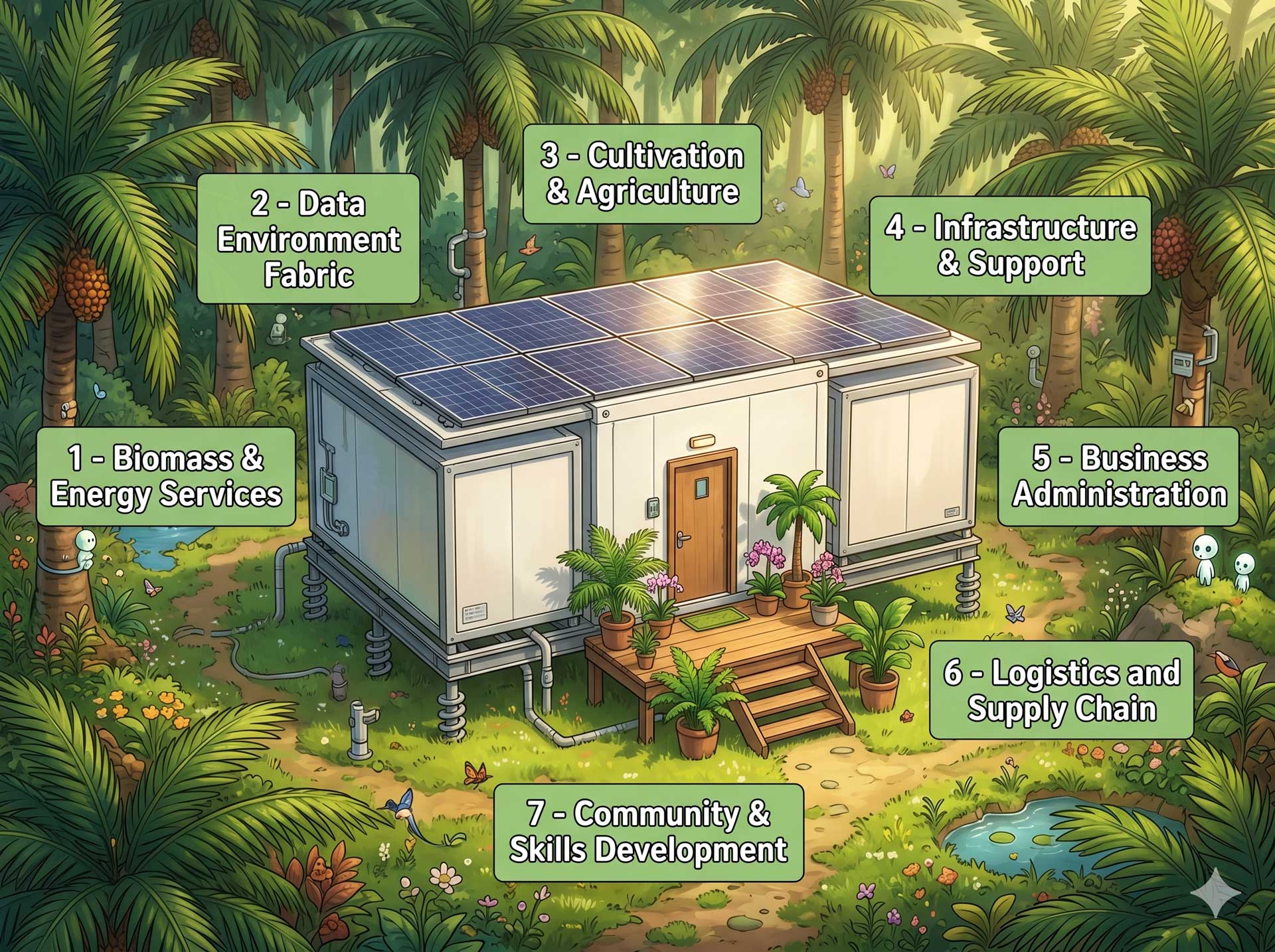
- Biomass & Energy:Waste-to-energy revolution and syngas conversion.
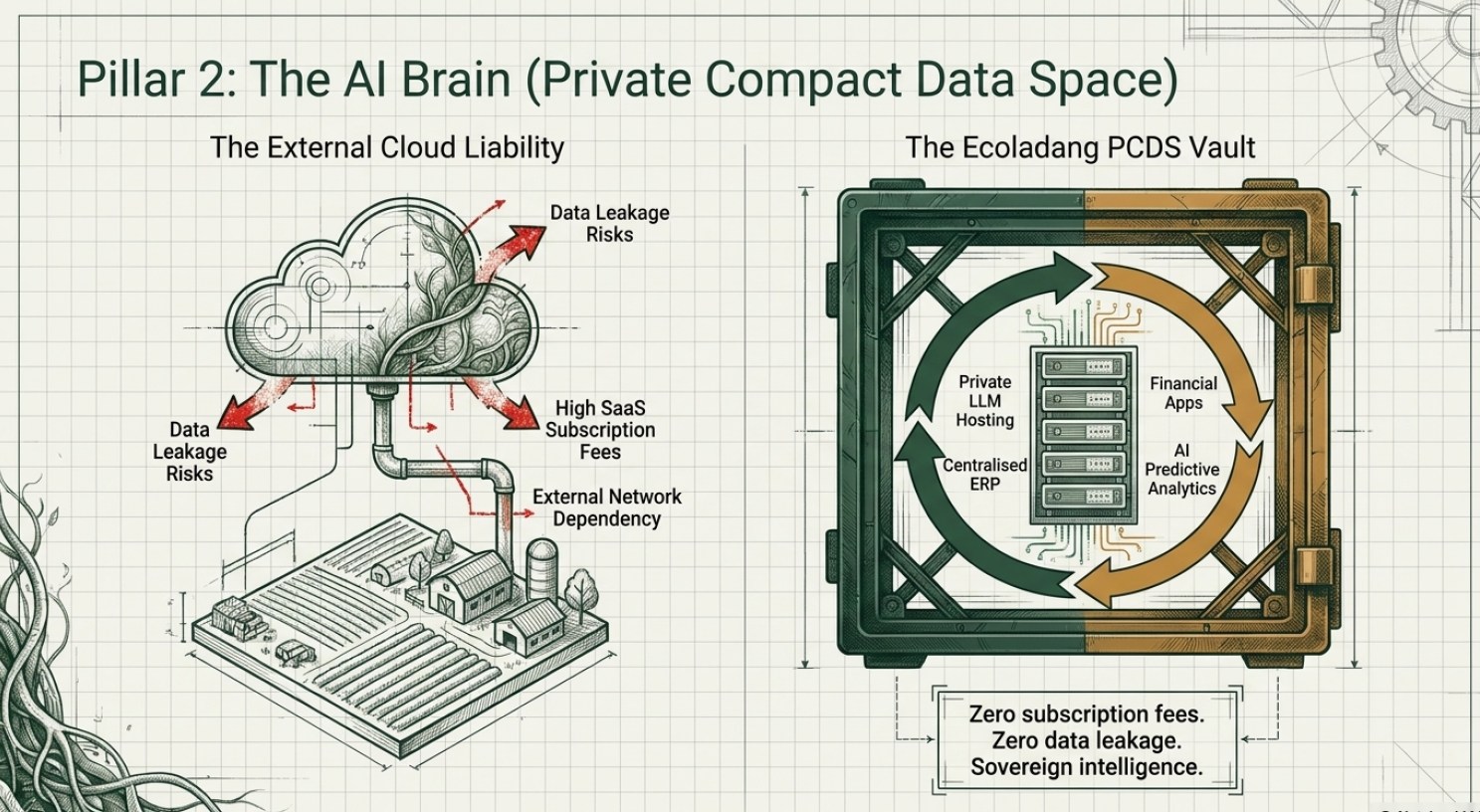
- Data Environment Fabric (SAIS): The Sovereign Artificial Intelligence Space acting as the secure, localized central brain.
- Cultivation & Agriculture: High-yield niche production (insect farming, mycelium, hydroponics).
- Infrastructure & Support: The physical and digital IT/OT converged infrastructure guaranteeing maximum uptime.
- Business & Administration: Standardized standard operating procedures (SOPs) and centralized command control.
- Logistics & Supply Chain: Built-in cold-chain integrity and market distribution.
- Community & Skill Development:Vocational training pipelines aimed at reversing human capital flight.
- Key Partners: Industrial automation hardware suppliers, leading academic research partners (such as Taylor's University), and specialized bio-integrators (e.g., Protenga).
- Key Activities:Deploying hardened edge networks, maintaining 99.999% OT uptime, managing localized telemetry pipelines, enforcing Infrastructure as Code (IaC) across the fleet, and curating secure API access.
- Value Proposition: We transform fragile consumer "smart farming" into an investable, enterprise-grade asset. By physically and logically separating mission-critical PLC logic from IT dashboards and AI compute, we guarantee operational safety while providing a massive, secure sandbox for agricultural experimentation.
- Customer & Stakeholder Segments:Franchise operators (who require a foolproof, automated UI), Academic partners (who require raw, high-resolution environmental data access), and Investors (who require immutable, auditable operational logs).
- Cost Structure:A strategic initial capital expenditure for Tier-1 industrial hardware and clustered localized compute nodes. This upfront cost is rapidly offset by near-zero operational downtime, immunity to consumer hardware degradation, automated fleet management, and drastically lower maintenance overhead.
- Revenue & Efficiency Streams: Massive reductions in manual labor for waste clearing and continuous climate management. Furthermore, the architecture creates monetizable data streams and sandbox access for specialized agricultural R&D.
Tier 1: The Backbone (Mission-Critical OT)
- Hardware: Industrial Micro-PLCs (Programmable Logic Controllers) and RS-485 Modbus RTU environmental sensors.
- Role: The immutable core. This tier handles the absolute life-support systems for the micro-farm: automated climate control, heavy irrigation pump switching, syngas scrubber monitoring, and hazard safety loops.
- Characteristics: Hardwired, deterministic, and virtually indestructible. The PLC logic is executed locally and instantaneously. It does not rely on Wi-Fi, hypervisors, or dashboard interfaces. If the overarching IT network goes down, Tier 1 continues executing its safety and survival loops flawlessly for the individual AgriShack.
Tier 2: The Field Network (Extended Monitoring)
- Hardware: AS923 LoRaWAN Gateways and Industrial LoRaWAN Probes (NPK soil sensors, weather stations, deep water tank levels).
- Role:Long-range, battery-powered data gathering across the wider agricultural footprint where trenching physical cables is impossible or cost-prohibitive.
- Characteristics: High upfront cost per sensor, but delivers massive sub-GHz radio range capable of penetrating dense foliage and metal structures, with years of battery life. It is completely decoupled from the Tier 1 control logic, meaning a destroyed field sensor has no impact on core AgriShack operations.
Tier 3: The Periphery & Experimental Network (IT / Sandbox)
- Hardware: Zigbee 3.0 Coordinators and Consumer/Prosumer sensors (door contacts, motion sensors, smart managed plugs, generic ambient light sensors).
- Role:The ultimate flexibility layer. This is the sandbox designed for short-term experiments, testing new lighting algorithms, monitoring non-critical ambient data, and enabling academic research.
- Characteristics: Highly affordable, easily deployable, and physically segregated from core operations. If a device is stolen, broken, or if an experimental script disrupts a Zigbee network routing table, the farm continues operating perfectly.
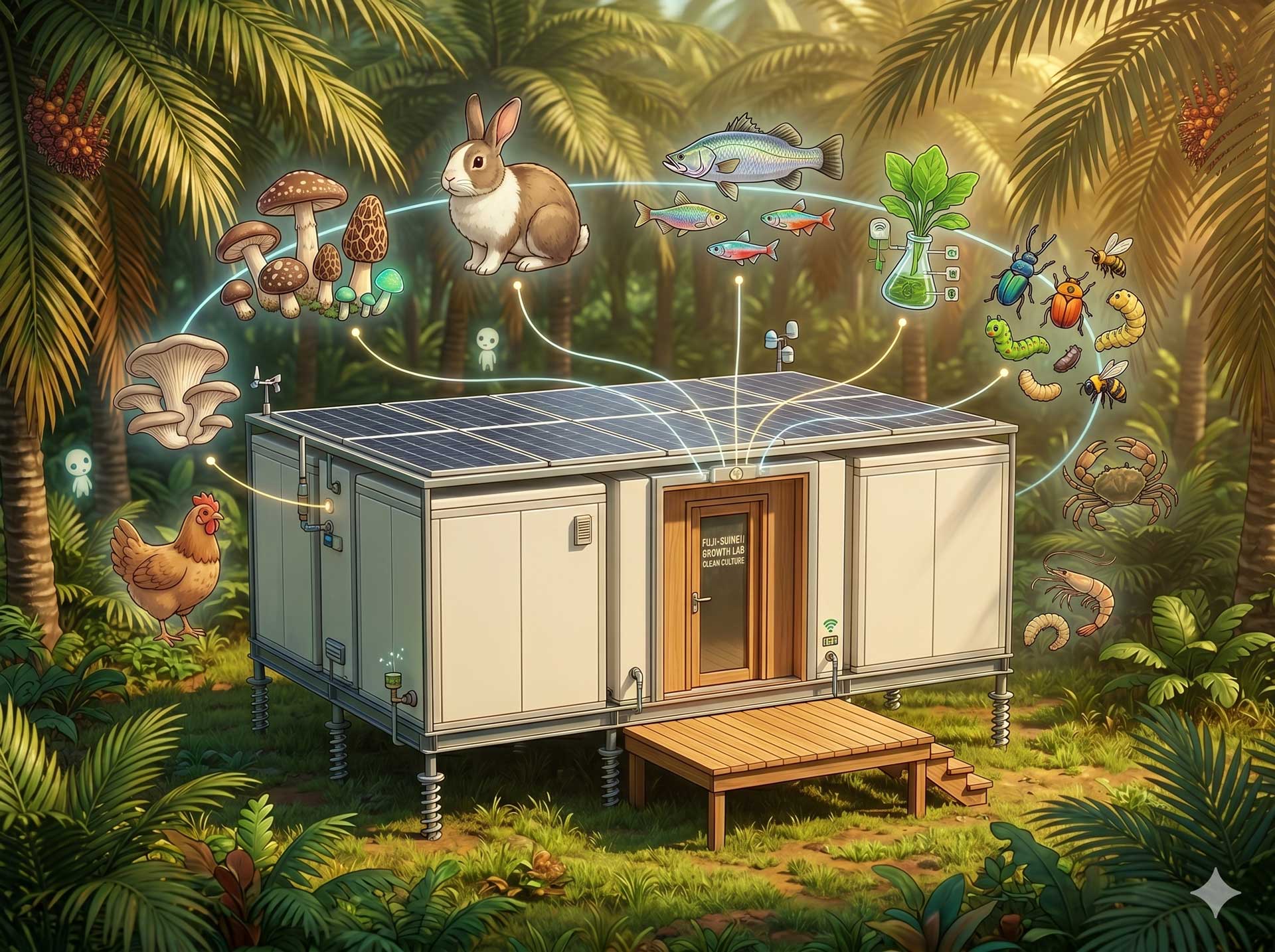
1. The Clustered Hardware Foundation
2. Fleet Management via Ansible (GitOps)
3. The OT Over-The-Air (OTA) Pipeline
1. Data Aggregation & The Customer API
2. Vision & Security: AI-Powered Surveillance
3. Dedicated Unified Communications
1. The Immutable Audit Trail (Graylog)
2. Dedicated AI Compute: LM Studio & LMlink
3. Predictive Maintenance via Local LLMs
Ecoladang Micro Farms
Ecoladang - Eco Farming for today, tomorrow and the future. Ecoladang is dedicated to fostering sustainable agricultural practices that empower local communities and promote environmental stewardship.
Ecoladang Micro Farms transcends traditional agriculture. We transform underutilized farmland into a self-sustaining, high-yield economic engine. This revolutionary ecosystem generates its own clean power from agricultural waste, fueling high-value micro-farms and an integrated Fabrication & Training Center. The entire operation is governed by an on-site, hardened AI Data Center—the Sovereign Artificial Intelligence Space (SAIS). This system doesn't just manage; it learns, optimizes through real-time AI-driven Standard Operating Procedures (SOPs), and proactively earns revenue by offering sovereign compute services globally.
📢 Farmstead Updates


Ecoladang Micro Farms
(opens in a new tab)Ecoladang transforms a small plot of farmland into a self-sustaining economic engine. Agricultural waste generates clean power for high-value micro-farms and a local Fabrication & Training Center, creating year-round, skilled jobs. The entire operation is

EMF Pillar 3: Insects & BSFL Bioconversion Node
www.ecoladang.com
EMF BSFL processes localized organic waste streams such as spent mushroom substrate, food scraps, and biomass—converting them into high-protein animal feed.This content isn't available right now
When this happens, it's usually because the owner only shared it with a small group of people, changed who can see it or it's been deleted.This content isn't available right now
When this happens, it's usually because the owner only shared it with a small group of people, changed who can see it or it's been deleted.This content isn't available right now
When this happens, it's usually because the owner only shared it with a small group of people, changed who can see it or it's been deleted.