ChatGPT Summary
Additional Sources
- https://www.nst.com.my/business/economy/2026/08/1518752/miti-implement-low-altitude-economy-project
- https://theedgemalaysia.com/node/808265
Related Articles
- https://logistics.asia/low-altitude-economy-seen-to-be-malaysias-next-growth-engine/
- https://technode.global/2026/06/24/malaysia-pushes-drone-evtol-sector-as-new-economic-frontier/
How China is approaching this
https://baike.baidu.com/en/item/White%20Paper%20on%20Low-Altitude%20Economy%20Infrastructure%20Development%20(2026)/1664831
The Ecoladang Whitepaper
EXECUTIVE WHITEPAPER
Biomass-Powered Air Logistics: Integrating Ecoladang's AgroShacks into Malaysia's Low-Altitude Economy (LAE)
Document ID: EMF-LAE-WP-v1.0
Date: August 25, 2026
Author: Prepared by the Systems Engineering Division of My Data Sys Sdn Bhd for the Ministry of Investment, Trade and Industry (MITI), Malaysia Aerospace Corporation (NAICO), and the Malaysian Industry-Government Group for High Technology (MIGHT).
Status: Institutional Concept Proposal
1. Executive Summary
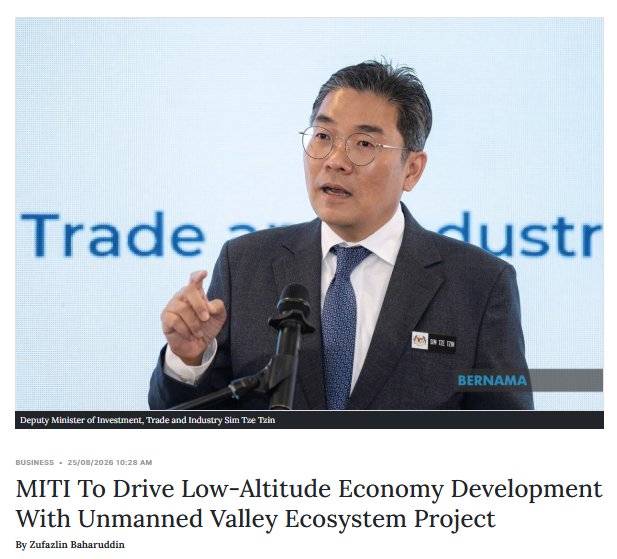
Malaysia is currently establishing a leading regional position in the emerging Low-Altitude Economy (LAE), targeting an estimated RM50.7 billion contribution to Gross Domestic Product (GDP) and the creation of 100,000 high-value, high-income jobs by 2030. Under the joint leadership of the Ministry of Investment, Trade and Industry (MITI) and the Ministry of Transport (MoT), the government is aggressively formulating a national LAE roadmap and establishing regional drone testing environments (the "Unmanned Valley Ecosystem" and MIGHT's Mini Sandbox) to pilot Unmanned Aircraft Systems (UAS), Advanced Air Mobility (AAM), and autonomous air cargo delivery by early 2027.
While unmanned aerial logistics offer a massive economic opportunity to bypass traditional transit bottlenecks, the commercial deployment of heavy-lift cargo drones in rural Malaysia faces three critical, unresolved infrastructure deficits:
- The Energy Void: Large autonomous cargo drones require significant battery recharging or hydrogen refueling infrastructure, which is highly impractical to deploy in remote agricultural valleys using traditional municipal electricity grids.
- The Communications & Compute Deficit: Real-time autonomous flight coordination, local Unmanned Traffic Management (UTM), and collision-avoidance telemetry require high-density, low-latency localized edge computing. Relying on remote, centralized cloud servers introduces dangerous latency spikes and cellular coverage black spots in deep rural terrains.
- The First-Mile Operational Gap: There is a lack of secure, weather-resistant, off-grid landing depots that can automatically store, process, and cold-preserve fresh agricultural produce hauled from remote mountain smallholdings.
The Ecoladang Sovereign Micro-Farm Initiative (EMF) presents an elegant, ready-to-deploy physical and digital solution. By integrating our modular, off-grid AgroShacks as decentralized, biomass-powered Autonomous Drone Cargo Depots, we turn remote agricultural clearings into high-tech, self-sustaining aerospace nodes. Powered by on-site zero-emission thermochemical energy, managed by localized Edge-AI, and operated by highly trained local TVET (Technical and Vocational Education and Training) apprentices, the Ecoladang platform bridges the "agricultural first-mile gap" while establishing the physical backbone for Malaysia's low-altitude aviation future.
2. The Infrastructure Core: The Elevated AgroShack as an Autonomous Drone Depot
The physical landing and storage node of the Ecoladang LAE framework is the AgroShack—a modular, foldable, and highly expandable 300 to 800 sq. ft. "Farm-in-a-Box" precision-controlled facility.
Heavy-Lift Autonomous Cargo Drone
▼ (Auto-Landing)
Ecoladang Reinforced Structural Roof Deck
ZONE 1: SRE Server Airlock & Edge-AI Hub
· Runs local UTM, Starlink, and Edge LLM
· Offline-first telemetry sync via SAIN
ZONE 2: Cold-Chain Packing & Processing
· Standardized sorting & vacuum sealing
· Automated weight & e-Invoicing logs
▼ (Elevated 1.0 Meter)
============= GROUND LEVEL =============
Concrete-Free Helical Steel Screw Piles
A. Structural and Environmental Humility
To preserve Malaysia's beautiful natural landscapes and comply with strict national environmental regulations, all AgroShacks are engineered for complete physical mobility and zero ecological footprint:
Concrete-Free Foundations: The shacks are gently elevated off the ground, secured to the earth using heavy-duty concrete-free helical steel screw piles. This design allows torrential monsoon rains to flow naturally beneath the structure without causing soil erosion or altering localized hydrology. Most importantly, it preserves the delicate sub-floor mycorrhizal and fungal networks, keeping the soil alive.- 100% Physical Mobility: The entire structural steel chassis (fabricated by partners like Concept Steel Creations) is modular and foldable. If a land concession ends, the entire drone depot can be unscrewed, folded, and relocated via electric haulers within days, leaving absolutely no concrete scars or environmental degradation on the land.
B. Decoupled Compartmentalization
Each 12-meter AgroShack depot is partitioned into three thermally and logically isolated chambers using high-grade polyurethane (PU) insulated sandwich panels. This "submarine bulkhead" layout ensures absolute biosecurity, thermodynamic efficiency, and server protection:
- The Left Compartment (Agricultural Fruiting/Cultivation): Houses vertical precision-growth racks for gourmet/medicinal mushrooms (Shiitake and Lion's Mane) or insect-rearing bins (BSFL and mealworms). These zones run at high relative humidity (70%–80% RH) and controlled tropical temperatures (24°C–28°C).
- The Center Compartment (The SRE Dry Hub & Airlock): Houses the local server racks, Starlink backup terminals, SMLight Zigbee 3.0 routing coordinators, battery banks, and the cargo packaging station. This room is kept strictly dry (<40% RH) using local HVAC controls, acting as a physical airlock to prevent dampness from the cultivation zones from corroding sensitive IT systems.
- The Right Compartment (The Downstream Biological Hub): Dedicated to high-density organic bioconversion (BSF composting) or vertical aquaculture. This compartment is kept isolated to ensure zero odor, biological spore, or insect cross-contamination into the cargo packing or computing spaces.
3. Thermodynamic Integrity: Zero-Emission Off-Grid Power & Intelligent Edge Compute
The primary bottleneck for rural drone logistics is power. Ecoladang solves this by utilizing localized, municipal-scale Biomass Energy & Waste Pyrolysis Systems to establish independent, off-grid microgrids.
A. The Pyrolysis Loop: "Baking, Not Burning"
Instead of traditional, open-air burning of agricultural waste—which causes severe regional haze and carbon emissions—Ecoladang utilizes advanced, closed-loop sub-critical water pyrolysis and zero-oxygen thermochemical gasification.
- The Feedstock: The system ingests local, underutilized agricultural waste, specifically processed Oil Palm Trunk (OPT) sawdust, rubberwood waste, and bamboo fibers.
- The Product Streams: This closed-loop "baking" process transforms raw agricultural waste into five highly profitable, clean energy and resource streams:
- Syngas (Synthetic Gas):Combusted on-site to run high-efficiency micro-turbines, generating 2 to 4 Megawatts (MW) of continuous, off-grid electricity.
- Biochar: Placed back into the local soil to lock down carbon and enhance agricultural moisture retention.
- Bio-oil: Upgraded into heavy industrial heating oil.
- Activated Carbon: Utilized for high-grade air and water purification filters inside the shacks.
- Wood Vinegar: Collected as a natural, non-chemical pesticide and growth enhancer.
- Off-Grid Drone Charging: By routing a fraction of the generated Syngas electricity to high-capacity outdoor DC fast chargers mounted on the reinforced roof decks of our AgroShacks, we establish 100% off-grid, rapid drone-battery charging stations in deep jungle locations.
B. The SAIN (Sovereign Agro-Intelligence Node) & Local UTM
Each drone depot is directed locally by the SAIN—a ruggedized, low-power Edge-AI compute node housed inside the dry control compartment.
- Offline-First Operation: To bypass rural cellular black spots, the SAIN runs localized, custom Large Language Models (LLMs) and telemetry compilers completely offline on a private Proxmox VE hypervisor. It monitors internal sensor networks (monitoring humidity, temperature, and CO2 drift via SMLight Zigbee meshes and RS485 Modbus backplanes) and automatically triggers corrective HVAC actuators.
- Edge UTM (Unmanned Traffic Management): The SAIN node connects directly to a localized ADS-B transponder and local meteorological sensors. It runs real-time autonomous flight-path calculations, local micro-wind advisory logging, and automated airspace de-confliction. By managing flight paths locally and only syncing compressed transaction metadata via encrypted Starlink connections, we achieve sub-millisecond safety latency, entirely immune to public internet outages.
4. Human Capital Transformation: The TVET Apprenticeship Model
Ecoladang actively rejects the extractive "cheap labor" paradigm. To support MITI's goal of generating 100,000 high-value agrotech jobs by 2030, we utilize our modular depots as active, certified TVET Apprenticeship Academies.
RURAL B40 YOUTH & APPRENTICES
▼
ECOLADANG TVET SEMI-DEGREE ACADEMY
(Developed with Taylor's Uni)
▼ ▼ ▼
Precision CEA & Thermochemical & Edge-AI, SRE, &
Mycology Loops Energy Operations Drone Navigation
▼
PRESTIGIOUS AGROTECH ENGINEER
· Minimum Income: > RM 4,000/Mo
· Direct Equity Co-Ownership (MOp)
A. The Academic Alliance
Developed in collaboration with leading academic institutions, our structured curriculum transforms rural B40 youth from low-wage gig-economy workers into prestigious Agrotech Systems Engineers.
- The Academic Research Exemption: Under our unique "Master MOP" research protocol, student apprentices run active telemetry, drone-routing, and biological yield experiments directly inside the shacks. The real-world data they harvest is fed back into university labs to optimize national crop models.
- The Three-Discipline Syllabus:
- Controlled Environment Agriculture (CEA): Master plant pathology, mycelium growth mechanics, and automated microclimate tuning.
- Thermochemical & Structural Engineering: Learn the operational dynamics of 1.0-meter screw-drive foundations and off-grid gasification energy loops.
- Information Systems & Drone Operations: Train in local network virtualization, SRE system monitoring (Node-RED, Graylog, Grafana), and CAAM-compliant autonomous cargo drone flight operations.
B. Redefining Rural Employment & The MOP Model
To combat the massive rural-to-urban brain drain (highlighted by the former Chief Statistician's warnings of falling interest in higher education as thousands of students skip SPM papers), Ecoladang offers an elite career path:
- Managed Operational Partner (MOP) Framework: Every graduate of our TVET academy is guaranteed a direct, contractually backed co-ownership stake in their local AgroShack operations. They do not work as minimum-wage farmhands; they operate as prestigious agrotech franchise managers.
- Income Uplift: By shifting rural youth from driving risky, low-wage city delivery bikes to managing off-grid automated drone depots and high-value mycology systems in their home sub-districts, we secure stable, high-value monthly incomes (exceeding RM 4,000/month), bringing generational wealth and economic dignity back to the Malaysian countryside.
5. Strategic Roadmap: The Lenggong Valley LAE Pilot
To demonstrate the commercial and operational viability of this framework ahead of CAAM's planned regulatory rollout in early 2027, My Data Sys Sdn Bhd proposes a structured, phased deployment in the Lenggong Valley, Perak—a region perfectly positioned due to its complex geographical terrain, high concentration of rural B40 smallholdings, and strong state support under the Sultan of Perak's "Food Basket" Initiative.
PHASE 1: THE SANDBOX (Q1 2027)
• Deploy 2x Compartmentalized AgroShacks in Lenggong.
• Establish off-grid 2 MW biomass pyrolysis power microgrid.
• Install rooftop drone helipad and SMLight edge-UTM telemetry nodes.
PHASE 2: THE RECONNAISSANCE (Q2 2027)
• Integrate CAAM-approved drone flight routing templates into SAIN.
• Begin autonomous first-mile cargo runs, carrying premium fresh mushrooms.
• First TVET cohort from Taylor's University begins live field apprenticeship.
PHASE 3: THE SOVEREIGN SCALE (Q3-Q4 2027)
• Scale pilot to a municipal-scale regional AgroPark.
• Establish fully integrated off-grid drone charging grids run on local OPT waste.
• Transition TVET apprentices into certified, co-owning Master MOP franchise operators.
By supporting this pilot, the Ministry of Investment, Trade and Industry (MITI) will secure a world-class, globally visible showcase of how Malaysia's Low-Altitude Economy (LAE) can merge seamlessly with Circular Agriculture, Clean Energy, and TVET Human Capital Development, establishing a highly resilient, sovereign technological legacy for the nation.
Our cover letter
Reference: MDS-EMF/MIGHT-LAE-2026-001
Date: August 25, 2026
YBhg. Datuk Rushdi Abdul Rahim President & Chief Executive Officer Malaysian Industry-Government Group for High Technology (MIGHT) MIGHT Partnership Hub, Persiaran APEC, 63000 Cyberjaya, Selangor, Malaysia
SUBJECT: Submission of Concept Proposal: Biomass-Powered Air Logistics – Integrating Ecoladang’s Off-Grid AgroShacks as Autonomous Drone Cargo Depots for the Low-Altitude Economy (LAE) Mini-Sandbox
YBhg. Datuk,
On behalf of the board of directors of My Data Sys Sdn Bhd and our strategic partners in the Ecoladang Sovereign Micro-Farm Initiative, I am pleased to submit our formal concept proposal and whitepaper: "Biomass-Powered Air Logistics: Integrating Ecoladang's AgroShacks into Malaysia's Low-Altitude Economy (LAE)."
We have closely reviewed the groundbreaking findings of the Malaysia Advanced Air Mobility Report 2026 published by MIGHT, as well as the recent launch of Malaysia’s first Low-Altitude Economy (LAE) Mini-Sandbox. We share your vision that advanced air mobility and unmanned aviation represent a generational engine of economic growth, with the potential to contribute RM50.7 billion to our national GDP and create 100,000 high-value jobs by 2030.
As Malaysia prepares to launch its national LAE roadmap and authorize limited commercial cargo drone trials in early 2027, the primary challenge remains deploying physical energy, telecommunications, and landing infrastructure into rural terrains. Heavy-lift logistics drones are highly power-hungry, and relying on traditional municipal electricity grids or centralized cloud communications in remote agricultural valleys introduces severe operational bottlenecks.
Ecoladang solves these critical deficits by turning our modular, off-grid AgroShacks into decentralized, biomass-powered Autonomous Drone Cargo Depots.
Our ready-to-deploy physical and digital platform offers key synergies with MIGHT’s current LAE initiatives:
- Zero-Emission Off-Grid Charging: Every Ecoladang AgroShack operates on an independent, off-grid microgrid powered by on-site sub-critical water pyrolysis of local agricultural waste (oil palm trunk and rubberwood sawdust). We generate 2 to 4 MW of continuous, clean electricity, enabling us to power high-capacity DC fast chargers for heavy-lift drones in deep rural locations without drawing from the national grid.
- Offline-First Edge-AI & Local UTM: Housed within our shacks, our Sovereign Agro-Intelligence Nodes (SAIN) run localized Edge-AI models completely offline. We can host local Unmanned Traffic Management (UTM) and localized collision-avoidance telemetry on our edge servers, achieving sub-millisecond safety latency and bypassing rural cellular black spots.
- National TVET Policy 2030 Alignment: In collaboration with our leading academic partner, Taylor's University, we operate our modular shacks as active, certified TVET academies. We train rural B40 youth to manage these complex thermodynamic, mechanical, and edge-computing networks, preparing them for prestigious agrotech and unmanned aviation careers.
- Concrete-Free Environmental Humility: Securing our modular shacks to the earth using concrete-free helical steel screw piles allows us to deploy landing depots with a zero-concrete footprint, preserving localized soil hydrology and mycorrhizal networks, with the capability of 100% physical relocation within days.
We are highly interested in collaborating with MIGHT, MRANTI, and the Civil Aviation Authority of Malaysia (CAAM) to deploy an elevated, compartmentalized AgroShack drone depot as an active, physical demonstrator within the LAE Mini-Sandbox.
We would welcome the opportunity to present our physical engineering models, Edge-AI telemetry architectures, and economic frameworks to your executive team at MIGHT. To coordinate an introductory meeting, your office may contact me directly at your earliest convenience.
Thank you for your visionary leadership in shaping Malaysia’s aerospace future. We look forward to a fruitful collaboration.
Our Copyright policy - https://www.ecoladang.com/about/privacy-policy/copyright-content-archiving-fair-use-policy/