Why Humanity Doesn't Farm or Eat Rabbits Like Chickens: The Biological & Industrial Paradox

Executive Summary
In 2024, global industrial agriculture processed over 74 billion chickens, yielding uniform poultry meat across nearly every market on Earth. In that same year, commercial facilities produced fewer than 1.2 billion rabbits, representing less than 1% of global poultry output.
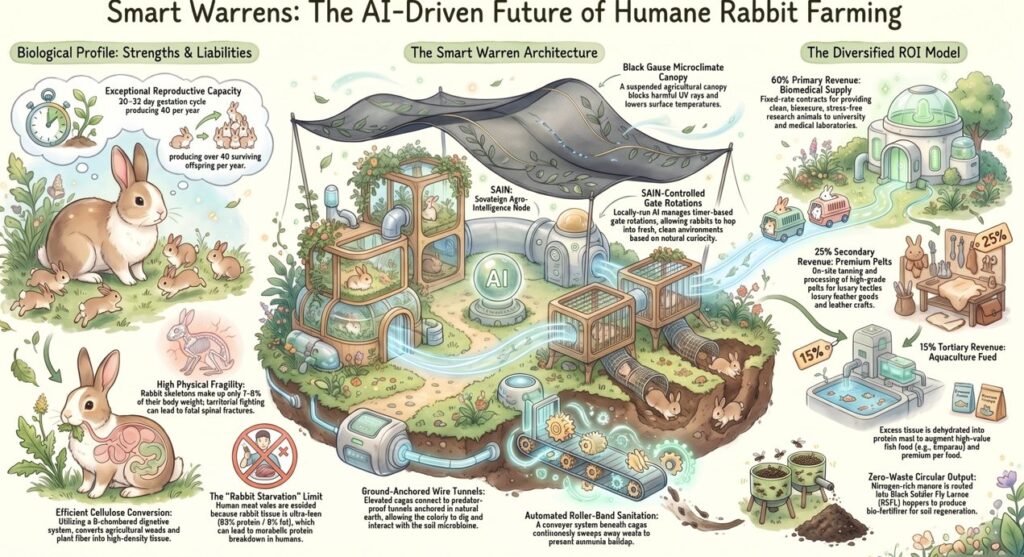
By every law of mammalian biology, these numbers should be reversed. A single female European rabbit (Oryctolagus cuniculus) can produce over 40 surviving offspring annually, yielding 180 kg of edible protein without requiring artificial heat lamps or commercial grain. Yet modern industrial civilization abandoned the world's most fertile mammal in favor of a cautious jungle fowl from Southeast Asia.
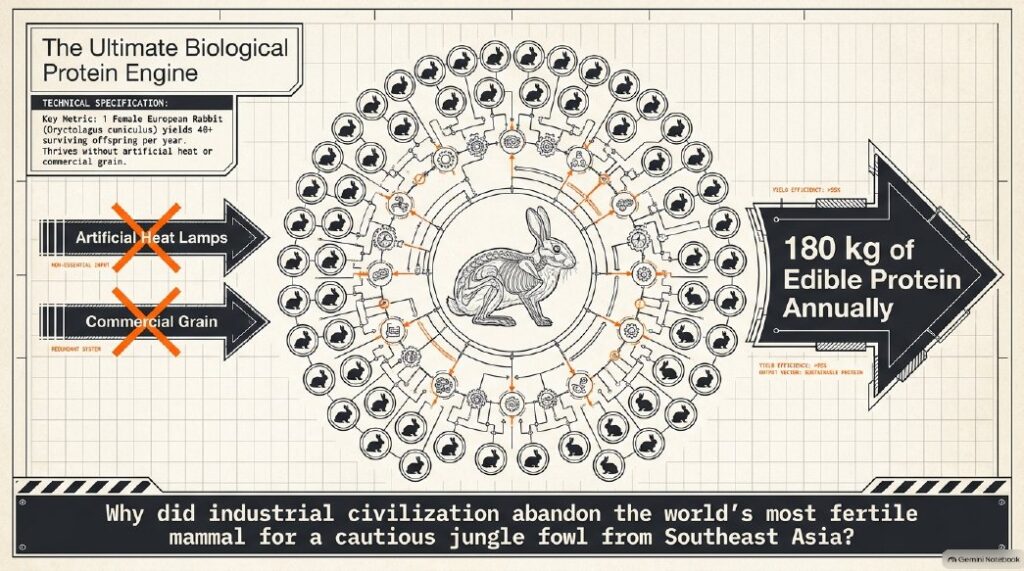
Understanding why humanity does not farm or eat rabbits on the scale of chickens reveals a series of insurmountable biological, mechanical, epidemiological, economic, and cultural traps hidden inside factory farming.
1. The Human Metabolic Ceiling: "Rabbit Starvation"
The primary biochemical reason rabbit meat cannot serve as a primary staple food for human societies lies in human liver biology.
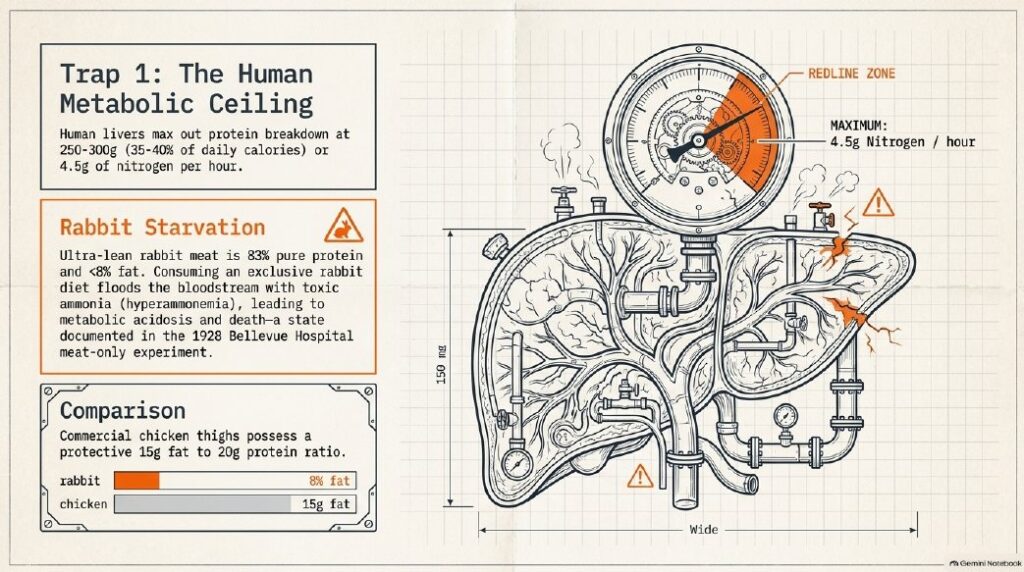
- The Bellevue Hospital Experiment: In 1928, Arctic explorer Vilhjalmur Stefansson and Karsten Anderson participated in a 12-month meat-only study at Bellevue Hospital under Dr. Eugene DuBois. When forced to consume ultra-lean meat without fat, Stefansson developed severe nausea, gastrointestinal distress, low blood pressure, and elevated toxic nitrogenous compounds within 36 hours.
- The Nitrogen Ceiling: The human liver can synthesize roughly 4.5 grams of nitrogen per hour, capping protein breakdown at 250–300 grams (or 35–40% of daily calories). Exceeding this threshold causes toxic ammonia to flood the bloodstream, resulting in hyperammonemia, metabolic acidosis, organ failure, and death.
- Ultra-Lean Composition: A commercial chicken thigh contains 15g of fat per 20g of protein. A European rabbit carcass is 83% pure protein and barely 8% intramuscular fat. Consuming an exclusive diet of lean rabbit meat leads to "rabbit starvation"—a state where individuals die with full bellies due to ammonia toxicity and lack of essential lipids.
🎧 Stream the Audio Journey
Don't want to scroll? Listen to our specialized NotebookLM AI hosts break down this exact page into a fun, animated conversation in English and Bahasa Melayu!
▶ Play Episode on Spotify▶ Play Bahasa Melayu Episode on Spotify!
2. Behavioral & Anatomical Traps of Factory Farming
A. Territorial Aggression vs. Open-Floor Flocks

In 1923, Cecile Steele accidentally created the modern broiler house in Ocean View, Delaware, housing thousands of chickens on a single continuous litter floor. Chickens naturally form communal flocks.
When French researchers attempted high-density floor housing for rabbits in 1956, it resulted in immediate violence. Possessing continuously growing incisors (2 mm/week) and strong jaw muscles, territorial rabbits bit flanks, ears, and disemboweled cage mates.
B. Explosive Leg Power & Broken Spines
When startled, a rabbit experiences a catecholamine surge, triggering powerful hind-limb kicks. Because a rabbit’s skeleton accounts for only 7–8% of its total body weight (compared to 15% in cats), the extreme torque generated by its legs frequently snaps its own lumbar vertebrae. In open-floor trials, up to 12% of rabbits sustained fatal spine fractures. Consequently, every breeding doe and growing litter requires individual steel wire cages, increasing CapEx and labor by over 800%.

3. Hindgut Fermentation & The Floor Paradox
                      RABBIT DIGESTIVE DUAL LOOP
+---------------------------------------------------------------+
|                                                               |
v                                                               |
[Stomach / Intestine] ---> [Cecum Fermentation] ---> [Soft Cecotropes (2-5 AM)]
|
| (Direct Re-ingestion)
+
Chickens possess simple gizzards that process cheap dry grain mash with total consistency. Rabbits rely on hindgut fermentation inside a massive cecum (60% of GI volume) powered by anaerobic Bacteroides bacteria.
- Epizootic Enteropathy: Feeding high-starch grain to speed up growth causes starch to enter the cecum, dropping internal pH from 6.0 to 5.2. Beneficial bacteria die, allowing Clostridium perfringens and E. coli to multiply and release lethal neurotoxins. A 1996 European outbreak annihilated up to 80% of juvenile factory rabbits in 8 weeks.
- Obligate Cecotrophy: Rabbits produce two feces types: dry day pellets and soft nocturnal cecotropes (expelled between 2:00–5:00 AM). Rabbits must re-ingest cecotropes directly from the anus to absorb microbial protein, Vitamin K, and essential amino acids.
- The Floor Paradox: If housed on wire mesh, cecotropes fall through, causing severe malnutrition, a 25% weight loss, and death. If housed on solid floors to access cecotropes, standing in waste causes severe bacterial foot infections (ulcerative pododermatitis / sore hocks).
4. The Mechanical Failure of Automated Slaughterlines
Modern poultry complexes process 140 to 175 chickens per minute using automated overhead shackles, electrified water baths, 54°C scald tanks, rubber plucking fingers, and hollow vacuum evisceration nozzles—taking under 20 minutes with zero human hands touching the bird.
POULTRY LINE:  [Electrical Bath] -> [Scald Tank] -> [Rubber Pluckers] -> [Auto Evisceration] (140/min)
RABBIT LINE:   [Manual Incision] -> [Hand Flaying] -> [Airborne Hair Removal via Tweezers] (60/hr)

Rabbits reject every step of this automated assembly line:
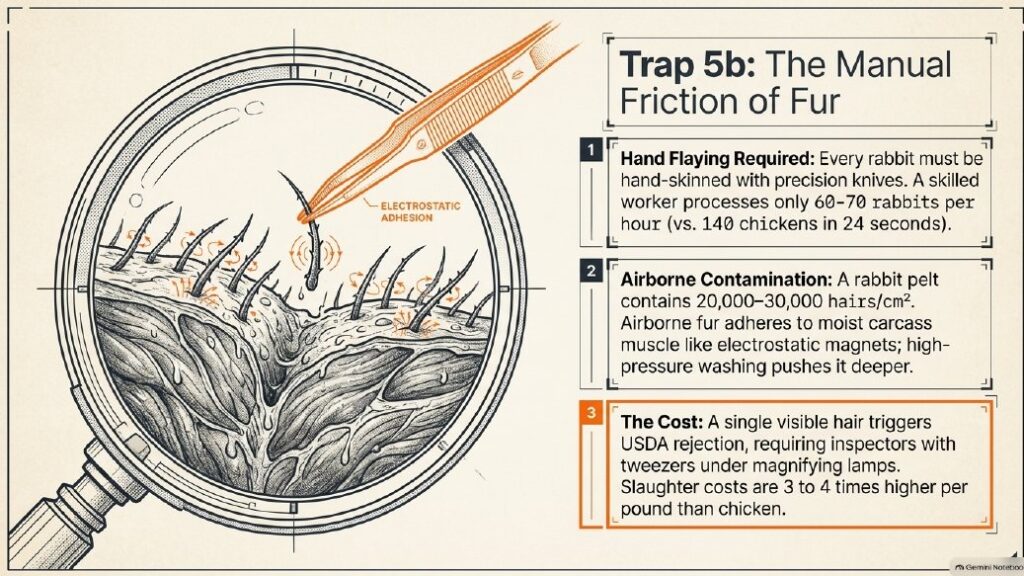
- Skin Shredding: Rabbits have a dense pelt (20,000–30,000 hairs/cm²) anchored in a paper-thin dermis. Scald tanks and rubber plucking fingers shred the skin into ribbons.
- Manual Flaying Required: Every rabbit must be hand-skinned using precision knives around the hocks and pulled downward. A skilled worker dresses only 60–70 rabbits per hour (compared to 140 chickens in 24 seconds).
- Airborne Hair Violations: Microscopic airborne fur adheres to moist carcass muscle like electrostatic magnets. High-pressure washing pushes hair deeper into tissue crevices. Under inspection standards, a single visible hair causes immediate carcass rejection, requiring human inspectors with tweezers under magnifying lamps—driving slaughter costs 3 to 4 times higher per pound than chicken.
5. Epidemiological Catastrophes & Insurability
                    TWIN EPIDEMIOLOGICAL CATASTROPHES
1952: MYXOMA VIRUS                        1984: RHDV / RHDV2
• Released in France (Dr. Armand-Delille)  • Emerged in Wuxi, China (Angora)
• Flea / Mosquito vector                   • Killed in 12-36 hours
• 99-99.8% fatality rate                   • Resists -20°C, bleach, drying
• Wiped out 90% wild European rabbits      • Destroyed 140M rabbits in 12 mos
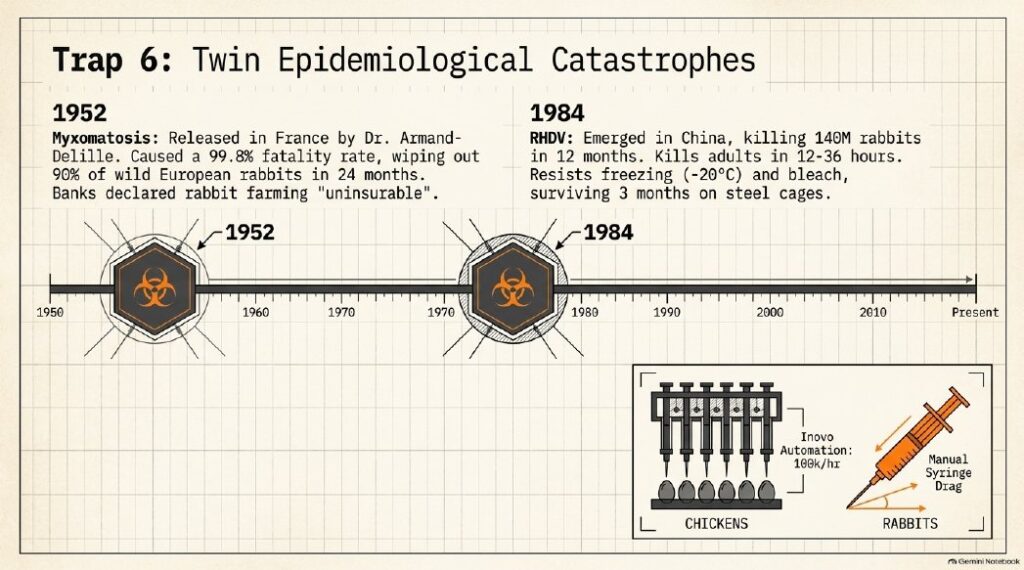
- Myxomatosis (1952): Dr. Paul-Félix Armand-Delille inoculated two wild rabbits on his estate with Mixoma virus. Mosquitoes and fleas carried the virus across Europe, causing a 99.8% fatality rate and wiping out 90% of Western Europe's wild rabbits within 24 months. Commercial rabbit farms collapsed, leading European banks to classify rabbit operations as uninsurable.
- Rabbit Hemorrhagic Disease Virus (1984 / 2010): RHDV emerged in China in 1984, killing adult rabbits in 12–36 hours with bloody nasal discharge, destroying 140 million rabbits in 12 months. The mutated RHDV2 strain (2010) attacks 15-day-old kits. RHDV survives freezing (-20°C), resists industrial bleach, lasts 3 months on steel cages, and is spread by scavengers.
- Vaccination Overhead: Chickens receive automated Inovo egg injections (100,000 embryos/hour). Rabbits require individual manual hypodermic syringe injections, inflating biosecurity labor costs.
6. Feed Economics & The Meat-Pet Divide
Agricultural Grain Subsidies
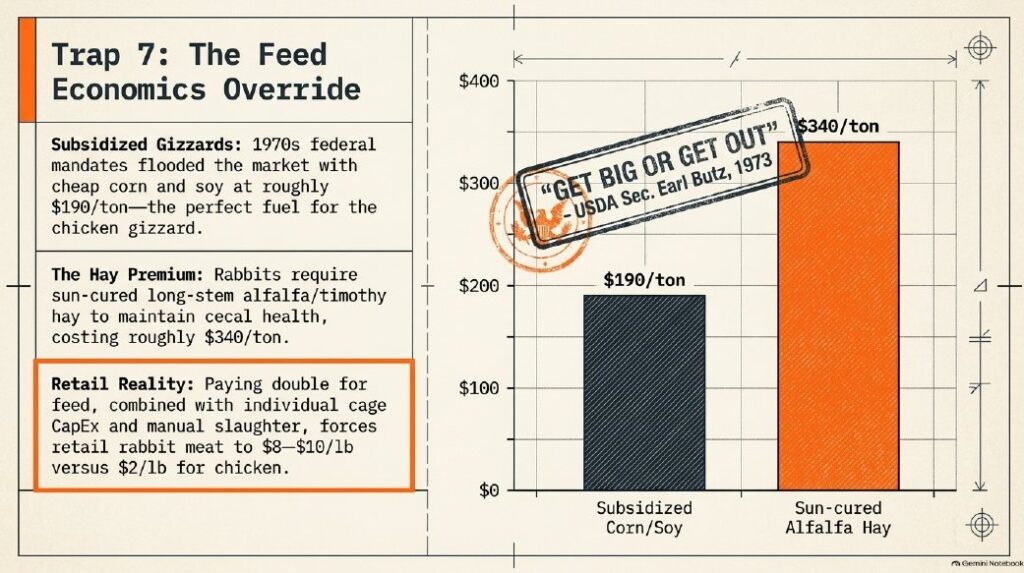
Following USDA Secretary Earl Butz's 1973 mandate ("get big or get out"), massive US federal subsidies flooded markets with cheap corn ($190/ton) and soy. Chicken gizzards thrive on cheap corn/soy mash. Rabbits require sun-cured long-stem alfalfa/timothy hay ($340/ton). Paying double for forage plus individual cage CapEx inflates retail rabbit meat to $8–$10/lb vs. $2/lb for chicken.
The Psychological Meat-Pet Divide
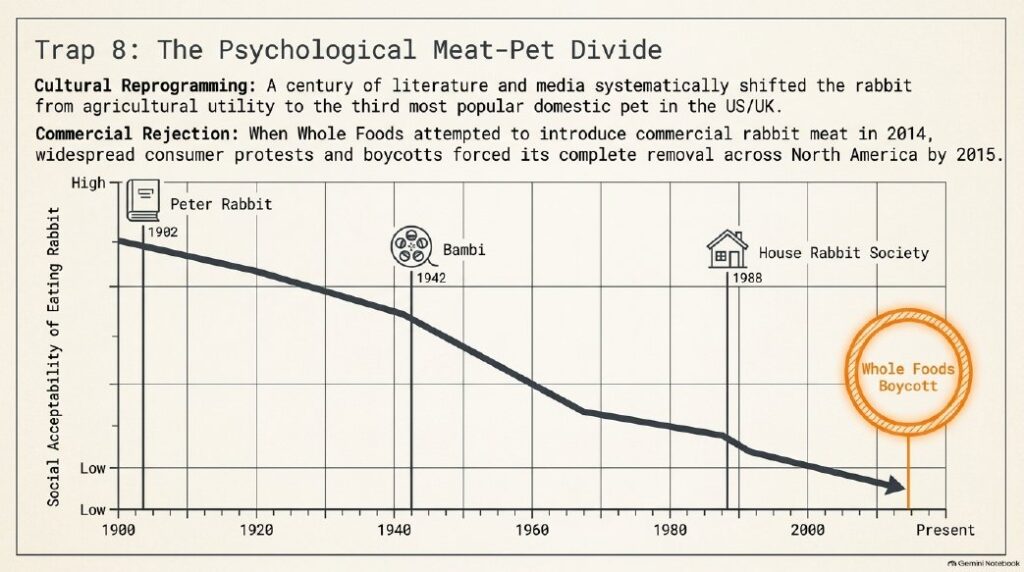
Literature and media shifted the rabbit's cultural status from livestock to domestic companion:
- Beatrix Potter’s The Tale of Peter Rabbit (1902)
- Walt Disney’s Bambi / Thumper (1942)
- House Rabbit Society (1988) establishing rabbits as indoor domestic pets
Today, rabbits are the third most popular domestic pet in the US/UK. When Whole Foods introduced commercial rabbit meat in 2014, widespread consumer boycotts and protests forced its complete removal across North America by 2015.
7. The Historical Paradox: Mechanical Convenience vs. Ecological Resilience
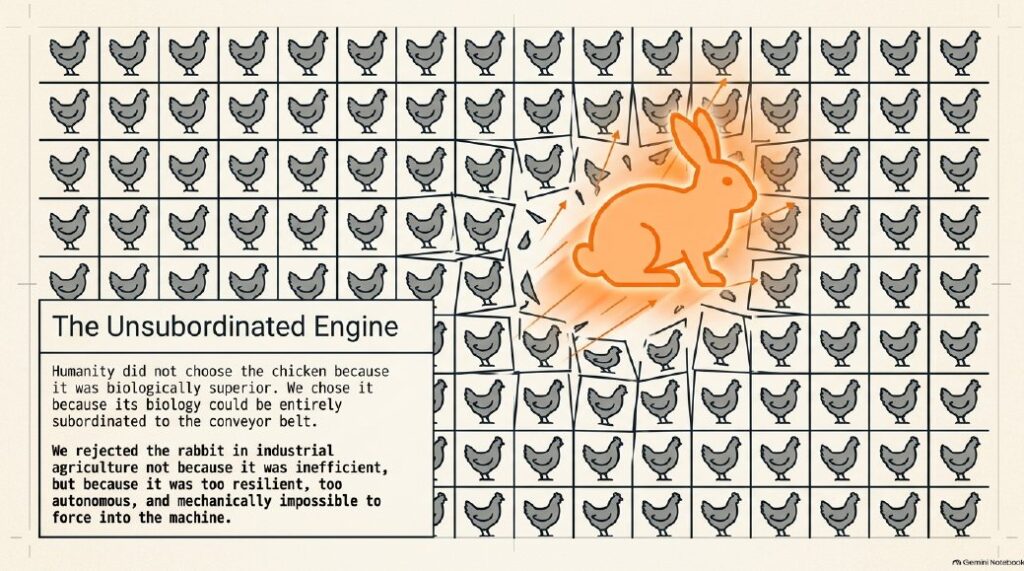
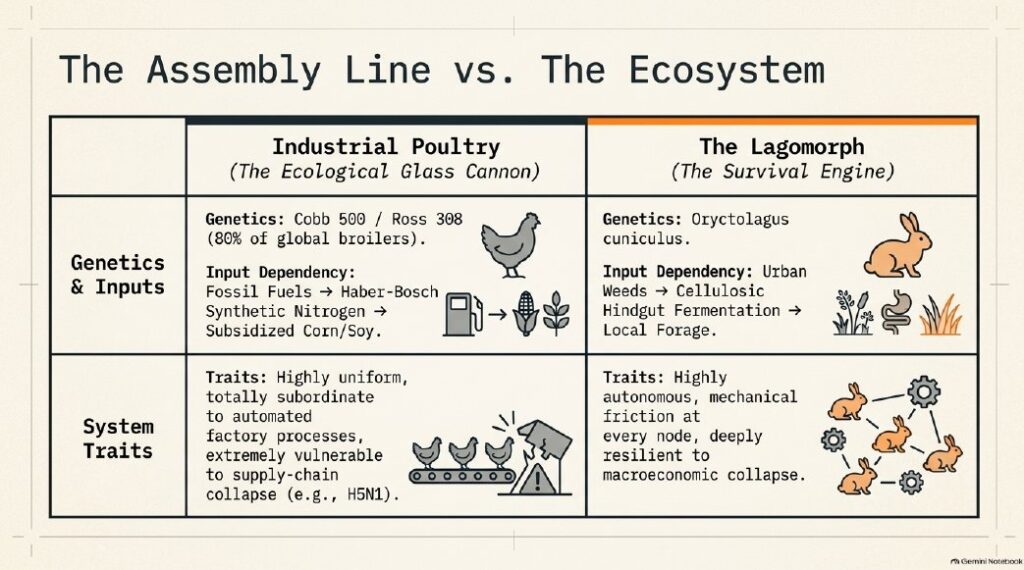
Humanity did not choose the chicken because it was biologically superior or resilient. Modern poultry production rests on extreme genetic uniformity—over 80% of global broilers descend from just two proprietary breeds (Cobb 500 and Ross 308). Powered by fossil fuels via the Haber-Bosch process for synthetic nitrogen fertilizer, industrial poultry is an "ecological glass cannon" vulnerable to outbreaks like H5N1 avian flu.
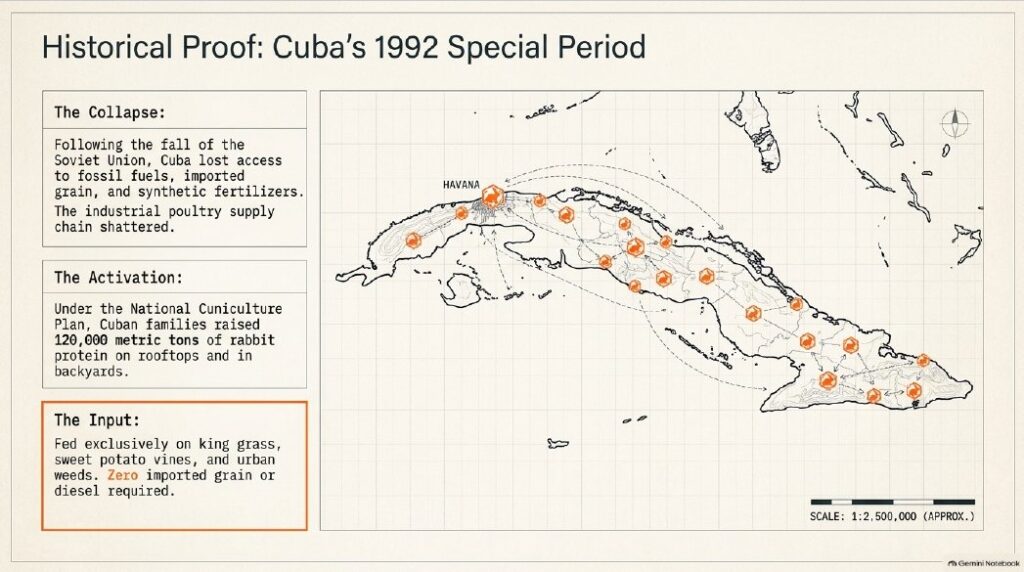
Conversely, when industrial supply chains collapse—as demonstrated during Cuba's 1992 Special Period (Período Especial) following the Soviet collapse—the rabbit reveals its true biological power [53, 54]. Under Cuba's National Cuniculture Plan, families raised 120,000 metric tons of protein on rooftops and yards feeding exclusively on king grass, sweet potato vines, and urban weeds without imported grain or diesel.
INDUSTRIAL POULTRY:   Fossil Fuel -> Haber-Bosch -> Subsidized Corn/Soy -> Cobb 500 (Glass Cannon)
ECOLADANG LAGOMORPH:  Urban Weeds -> Cellulosic Hindgut -> Resilient Local Utility (Survival Engine)
We rejected the rabbit in industrial agriculture not because it was inefficient, but because it was too resilient, too autonomous, and biologically impossible to subordinate to the conveyor belt